


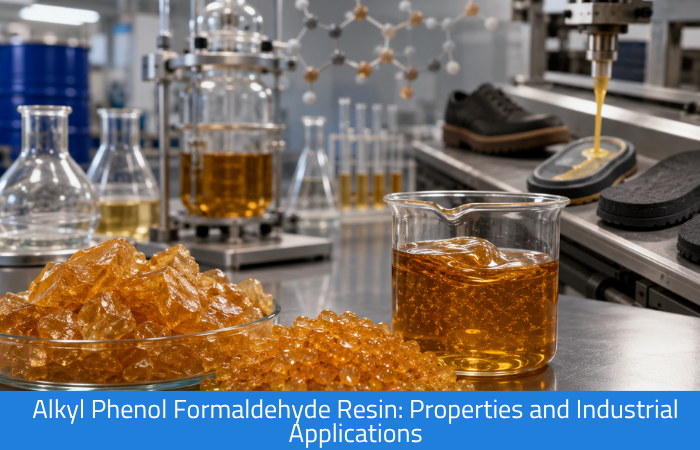
Alkyl phenol formaldehyde resin is a specialty phenolic resin produced by reacting alkyl substituted phenols with formaldehyde, resulting in a versatile chemistry used extensively across rubber adhesives, protective coatings and various industrial bonding applications. Understanding what alkyl phenol formaldehyde resin is, how it is manufactured and where it delivers the most value helps formulators and buyers make informed decisions when specifying this resin for their applications. This article provides a clear overview of alkyl phenol formaldehyde resin chemistry and its major application areas.
Defining Alkyl Phenol Formaldehyde Resin Chemistry
Alkyl phenol formaldehyde resin is synthesized by reacting an alkylated phenol, most commonly para tertiary butylphenol or para octylphenol, with formaldehyde under either acidic or alkaline catalytic conditions. The alkyl substitution introduced at the para position of the phenol ring significantly influences the resin’s compatibility with rubber and other nonpolar materials, distinguishing alkyl phenol formaldehyde resin from unmodified phenol formaldehyde resin, which lacks this compatibility advantage. Depending on the molar ratio of phenol to formaldehyde and the catalyst used during synthesis, the resulting resin can be produced as either a resole type, which is heat reactive and self curing, or a novolak type, which is non heat reactive and requires an external curing agent to crosslink.
Resole Versus Novolak Alkyl Phenol Formaldehyde Resin Types
Understanding the distinction between resole and novolak type alkyl phenol formaldehyde resin is essential for selecting the correct grade for a given application. Resole type resins, produced with excess formaldehyde under alkaline conditions, cure through heat activation alone, making them suitable for applications requiring in situ crosslinking during processing, such as rubber compounding where the resin reacts during vulcanization. Novolak type resins, produced with excess phenol under acidic conditions, remain thermoplastic until combined with a curing agent such as hexamethylenetetramine, offering formulators more control over when and how the resin cures during their manufacturing process. This flexibility in curing behavior is one of the key reasons alkyl phenol formaldehyde resin remains valuable across such a wide range of industrial applications.
Applications in Rubber Compounding and Tire Manufacturing
One of the largest application areas for alkyl phenol formaldehyde resin is rubber compounding, where it functions as a tackifying and reinforcing resin that improves processing characteristics and final product properties. In tire manufacturing, alkyl phenol formaldehyde resin, particularly resole type grades, is used as a bonding resin that improves adhesion between rubber compounds and reinforcing materials such as steel cord and textile fabric, contributing to tire durability and performance under the extreme mechanical stress tires experience during vehicle operation. The resin’s ability to enhance shore hardness and provide a plasticizing effect during rubber processing also makes it valuable across broader rubber goods manufacturing beyond tires alone.
Read Our Article
Alkyl Phenolic Resins for Footwear Adhesives: Performance BenefitsApplications in Adhesives and Tackifier Systems
Beyond rubber compounding, the use of phenol formaldehyde resin chemistries serves as an important tackifying component in adhesive formulations, particularly rubber based contact adhesives used in footwear manufacturing, general purpose bonding and construction applications. The resin contributes strong initial tack and improved heat resistance to these adhesive systems, properties that are especially valuable in applications where the finished bond must withstand elevated temperature during processing or service life. Adhesive formulators select specific grades of alkyl phenol formaldehyde resin based on the rubber base polymer being used and the performance requirements of the finished bonded product, whether that involves footwear soles, laminated materials or general industrial bonding applications.
Comparing Alkyl Phenol Formaldehyde Resin to Unmodified Phenolic Resin
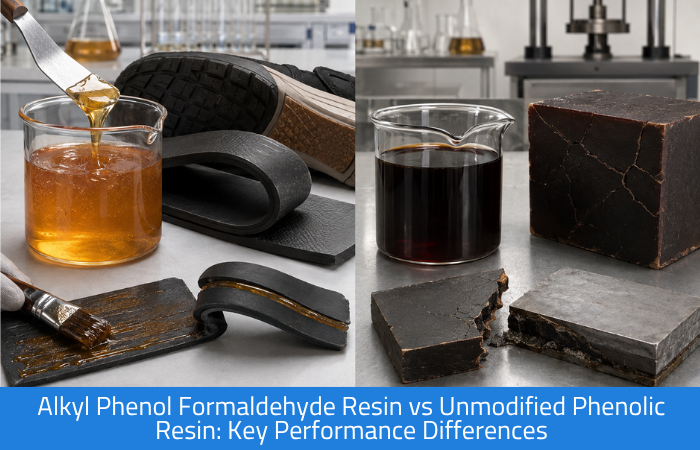
Understanding how alkyl phenol formaldehyde resin differs from standard, unmodified phenol formaldehyde resin helps clarify why the alkylated version has become so widely adopted in rubber and adhesive applications. Unmodified phenolic resin, lacking the alkyl substitution, tends to be more polar and less compatible with nonpolar rubber compounds, limiting its effectiveness as a tackifier in rubber based systems. The alkyl group introduced during synthesis of alkyl phenol formaldehyde resin improves this compatibility significantly, allowing the resin to blend more effectively into rubber matrices and deliver the tackifying and reinforcing benefits that rubber compounders and adhesive formulators rely on. This structural difference explains why alkyl phenol formaldehyde resin, rather than standard phenolic resin, dominates in tire, footwear and rubber goods manufacturing applications.
Environmental and Handling Considerations During Manufacturing
Manufacturing and handling alkyl phenol formaldehyde resin requires attention to formaldehyde emission control and worker safety, since formaldehyde is a reactive raw material with recognized health and environmental considerations. Reputable manufacturers implement process controls to minimize residual free formaldehyde content in the finished resin, and buyers should request documentation confirming these levels meet applicable regulatory limits for their target market and application. Facilities using alkyl phenol formaldehyde resin in their own manufacturing processes should also follow proper ventilation and handling practices as outlined in the safety data sheet, particularly during hot melt compounding or solvent based formulation where volatile emissions are more likely to occur.
Our Other Products
Titanium Acetylacetonate ChelateApplications in Protective Coatings and Varnishes
Alkyl phenol formaldehyde resin also plays a role in certain protective coating and varnish formulations, where its heat reactive resole type grades can be incorporated to improve chemical resistance, hardness and adhesion of the finished coating film. These phenolic coatings are valued in applications requiring resistance to solvents, oils and moderate chemical exposure, making alkyl phenol formaldehyde resin a useful component in specialty industrial coatings and can linings where robust chemical resistance is essential. While epoxy and polyurethane systems have become more common in many general industrial coating applications, alkyl phenol formaldehyde resin retains a niche role in specific high performance coating formulations that benefit from its unique combination of heat resistance and chemical stability.
Applications in Friction Materials and Molding Compounds
Alkyl phenol formaldehyde resin is also used in the production of friction materials such as brake linings and clutch facings, where its thermal stability and bonding strength help hold friction material components together under the extreme heat and mechanical stress generated during braking operations. In molding compound applications, the resin serves as a binder that holds reinforcing fillers together, contributing to the mechanical strength and heat resistance of the finished molded product. These demanding applications rely on the resin’s ability to maintain structural integrity across a wide temperature range, a property that distinguishes alkyl phenol formaldehyde resin from many alternative binder chemistries used in similar friction material applications.
Read Our Article
Common Challenges in Alkyl Phenolic Resin FormulationsRegional Manufacturing and Supply Considerations
Alkyl phenol formaldehyde resin manufacturing requires careful control of reaction conditions, raw material quality and catalyst selection to achieve consistent softening point, molecular weight and reactivity across production batches. Commercial demand across the alkylphenol resin market means buyers sourcing this resin for critical applications such as tire manufacturing or footwear adhesives should work with manufacturers who maintain robust quality control systems and can provide detailed batch documentation, since even minor variation in resin properties can affect downstream processing and final product performance. Regional availability and lead times also matter for buyers managing large scale production schedules, making supplier reliability an important factor alongside technical performance when selecting an alkyl phenol formaldehyde resin source.
Grade Selection Based on End Use Performance Targets
Because alkyl phenol formaldehyde resin is available in a range of softening points, molecular weights and resole or novolak types, selecting the correct grade for a specific end use requires clear communication between the formulator and the resin manufacturer about the intended application and performance targets. A grade optimized for tire cord bonding, for example, will typically differ significantly from one optimized for footwear tackifier applications or protective coating formulation, even though all three fall under the broader alkyl phenol formaldehyde resin category. Buyers new to this resin family should provide their manufacturer with detailed information about processing conditions, target substrate and expected service environment so the most appropriate grade can be recommended from the outset, rather than discovering a mismatch only after production trials have already begun.
Our Other Products
Rosin Modified Maleic ResinsSourcing Alkyl Phenol Formaldehyde Resin From a Trusted Manufacturer
Given the wide range of demanding applications that rely on alkyl phenol formaldehyde resin, from tire manufacturing to footwear adhesives and friction materials, sourcing from an experienced manufacturer with proven technical expertise is essential. Tridev Group is a reputable alkyl phenolic resin manufacturer supplying high-purity grades across rubber compounding, adhesive and tackifier applications, supporting formulators who need consistent quality and reliable technical support for their alkyl phenol formaldehyde resin requirements. Partnering with a knowledgeable phenolic resin manufacturer helps buyers navigate grade selection and application specific formulation guidance with confidence, particularly when moving into a new end use segment or working with an unfamiliar rubber or coating system for the first time.
Alkyl phenol formaldehyde resin is a versatile and technically important chemistry that supports critical performance requirements across rubber compounding, adhesives, protective coatings and friction materials. Understanding the fundamental chemistry, the difference between resole and novolak types, and the specific application benefits this resin delivers helps formulators and buyers make informed sourcing decisions, particularly when working with an established manufacturer such as Tridev Group who can provide the technical guidance needed to select the right grade for each unique application.
- Phenolic Resin Manufacturing Process: From Raw Material to Finished Product
- Questions to Ask a Phenolic Resin Manufacturer Before Placing an Order
- Alkyl Phenol Formaldehyde Resins Market Demand in Asia and Middle East
- Alkyl Phenol Formaldehyde Resin vs Conventional Phenolic Resin
- What Is Alkyl Phenol Formaldehyde Resin and Where Is It Used