


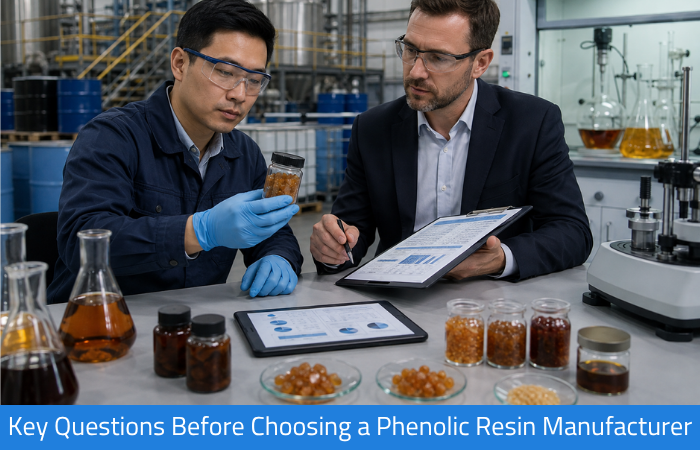
Ordering phenolic resin for the first time from a new supplier, or evaluating whether to switch phenolic resin manufacturers, requires asking the right technical and commercial questions to avoid costly surprises after production begins. Phenolic resin performance depends on numerous variables including molecular weight, softening point, curing behavior and compatibility with specific formulation systems, making thorough supplier evaluation essential before committing to bulk purchase. This article outlines the key questions every buyer should ask a phenolic resin manufacturer before placing an order.
What Grade and Type of Phenolic Resin Best Fits My Application
Before discussing pricing or logistics, buyers should ask the phenolic resin manufacturer to recommend the specific grade and type best suited to their application, whether that involves resole or novolak chemistry, standard phenolic resin or alkyl phenolic resin variants, and what molecular weight or softening point range fits their processing requirements. A knowledgeable manufacturer should ask detailed questions about the buyer’s end use, processing conditions and performance targets before making a recommendation, rather than simply offering a generic catalog product. Buyers should be cautious of suppliers who recommend a grade without first understanding these application specifics, since this often indicates limited technical expertise or a one size fits all sales approach that may not deliver optimal performance for the buyer’s specific formulation.
What Quality Control Testing Is Performed on Each Phenolic Resin Batch
Buyers should ask exactly what quality control tests the phenolic resin manufacturer performs on every production batch, including which properties are measured, what testing standards or methods are used, and whether certificates of analysis are provided with each shipment. Understanding this testing regime helps buyers assess whether the manufacturer’s quality control process aligns with the properties that matter most for their specific application, whether that is softening point consistency for hot melt processing or acid value control for rosin modified phenolic resin systems. Manufacturers who can provide detailed, consistent testing documentation demonstrate a level of quality discipline that reduces the risk of receiving out of specification material that could disrupt the buyer’s own production process.
Read Our Article
Alkyl Phenol Formaldehyde Resin vs Conventional Phenolic ResinWhat Is the Typical Batch to Batch Variation I Should Expect in Phenolic Resin
Even resin batches that meet published specification ranges can show some variation from batch to batch, and buyers should ask the manufacturer directly what level of variation is typical for the specific grade being purchased. This question helps buyers understand whether they need to build extra process tolerance into their own formulation to accommodate normal supplier variation, or whether the resin they are considering offers unusually tight consistency that allows for more precise downstream processing. Manufacturers with mature, well controlled production processes should be able to share historical batch data or statistical process control information that demonstrates their actual consistency track record rather than relying solely on specification range promises.
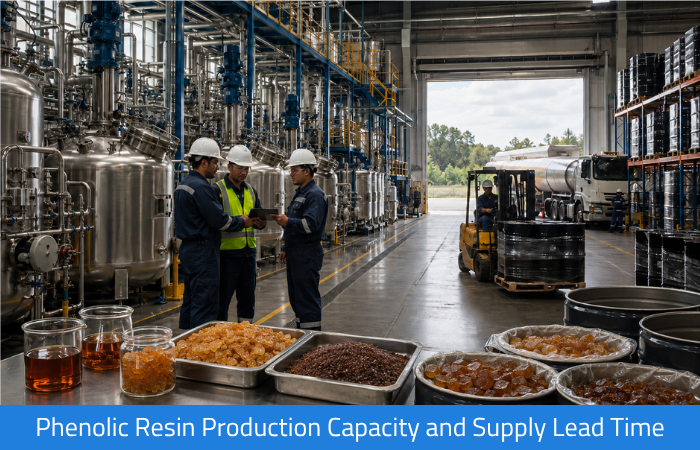
What Is Your Phenolic Resin Production Capacity and Typical Lead Time
Supply reliability is just as important as technical performance, so buyers should ask about the manufacturer’s production capacity, typical lead time for standard orders and how the manufacturer handles unexpected demand spikes or supply chain disruptions. Understanding whether the manufacturer maintains buffer inventory, multiple production lines or backup capacity gives buyers insight into how resilient their resin supply chain will be during periods of high demand or unforeseen disruption. Buyers with large scale or continuous production needs should specifically ask how the manufacturer would handle a sudden increase in order volume, since this scenario reveals whether the supplier has genuine scalability or is already operating near maximum capacity.
What Regulatory and Safety Documentation of Phenolic Resin Can You Provide
Buyers operating in regulated industries or supplying customers with strict compliance requirements should ask the phenolic resin manufacturer what regulatory documentation they can provide, including safety data sheets, certificates of compliance for relevant regional regulations, and any specific documentation needed for food contact, export or industry specific certification requirements. This question is particularly important for buyers in footwear, automotive or construction industries where end customers increasingly require full supply chain documentation to satisfy their own regulatory or sustainability commitments. A manufacturer unable to readily provide this documentation may create compliance risk for the buyer further down their own supply chain.
Our Other Products
Rosin Modified Phenolic ResinHow Do You Handle Phenolic Resin Custom Formulation or Specification Requests
Many buyers eventually need a phenolic resin grade tailored to specific performance targets that differ from standard catalog offerings, so it is worth asking early whether the manufacturer has in house research and development capability to support custom resin formulation requests. Buyers should ask about the typical timeline for developing and validating a custom grade, what minimum order quantities apply to custom products, and whether the manufacturer has experience developing similar customizations for other customers in comparable industries. This question helps buyers understand whether their chosen manufacturer can grow with their business as formulation needs evolve, rather than being limited to only standard, unmodified product offerings.
What Support Is Available When Phenolic Resin Formulation Issues Arise
Technical support responsiveness often matters as much as the resin itself, so buyers should ask what kind of troubleshooting support the manufacturer provides when formulation issues arise, whether that involves phone or video consultation, on site visits, or laboratory trial support. Understanding this support structure before an issue occurs helps buyers set realistic expectations and avoid frustration during an actual production problem, when fast, knowledgeable support can make the difference between a brief process adjustment and an extended production shutdown. Buyers should also ask for references or examples of how the manufacturer has helped other customers resolve similar formulation challenges in the past.
What Are the Phenolic Resin Payment Terms and Minimum Order Requirements
Finally, buyers should clarify commercial terms including minimum order quantities, payment terms, pricing structure for different order volumes, and any additional costs such as freight or packaging that might not be reflected in the base resin price. Understanding these commercial details upfront prevents misunderstandings later and allows buyers to accurately compare total cost across different phenolic resin manufacturers rather than comparing headline prices alone. Buyers should also ask whether pricing is subject to raw material cost adjustment clauses, since phenolic resin pricing can be sensitive to phenol and formaldehyde feedstock market fluctuations that may affect long term contract pricing.
Read Our Article
Alkyl Phenolic Resins for Footwear Adhesives: Performance BenefitsCan You Provide Phenolic Resin Sample Batches for Independent Trial and Validation
Before committing to bulk purchase, buyers should ask whether the manufacturer can supply sample quantities of the recommended phenolic resin grade for independent trial and validation within the buyer’s own production environment. This request allows buyers to confirm real world performance under their specific processing conditions rather than relying solely on technical data sheets and manufacturer claims. Buyers should also ask how long sample production and shipment typically takes, since this timeline affects overall project planning, and whether the manufacturer is willing to adjust the sample formulation slightly based on initial trial feedback before finalizing the commercial product specification for larger scale orders.
How Does Your Company Handle Phenolic Resin Recalls or Quality Deviations
Although uncommon, quality deviations or the need for a product recall can occur in any manufacturing operation, and buyers should understand upfront how their prospective phenolic resin manufacturer would handle such a situation if it arose. Asking about the manufacturer’s traceability systems, batch record retention practices and communication protocols during a quality event gives buyers confidence that any issue would be identified and addressed quickly, minimizing disruption to their own production and protecting their end customers from receiving affected material. Manufacturers with robust traceability systems can typically isolate an affected batch quickly, limiting the scope of any corrective action needed compared with suppliers lacking detailed batch level record keeping.
Our Other Products
Dimerized RosinBuilding a Strong Phenolic Resin Supplier Relationship From the Start
Asking these questions thoroughly before placing a first order helps buyers establish a phenolic resin supply relationship built on clear expectations and mutual understanding rather than assumptions that could lead to disappointment later. Tridev Group is a leading resins manufacturer that produces phenolic resin and answers these questions directly and transparently for prospective customers, supporting buyers who want confidence in both the technical performance and commercial reliability of their resin supply before committing to a purchase. Taking the time to evaluate a phenolic resin manufacturer thoroughly upfront ultimately saves buyers significant time and cost compared with discovering supply or quality issues only after production has already begun.
Selecting the right phenolic resin manufacturer requires more than comparing price quotations, and buyers who ask thorough technical, quality and commercial questions before ordering position themselves for a smoother, more reliable supply relationship. Working through these questions systematically with any prospective phenolic resin manufacturer, including an experienced supplier such as Tridev Group, helps buyers make confident sourcing decisions that support consistent quality and production reliability for their business. Buyers who treat this evaluation process seriously, rather than rushing to place an order based on price alone, generally find that the extra time invested upfront pays off through fewer surprises once full scale production begins.
- Phenolic Resin Manufacturing Process: From Raw Material to Finished Product
- Questions to Ask a Phenolic Resin Manufacturer Before Placing an Order
- Alkyl Phenol Formaldehyde Resins Market Demand in Asia and Middle East
- Alkyl Phenol Formaldehyde Resin vs Conventional Phenolic Resin
- What Is Alkyl Phenol Formaldehyde Resin and Where Is It Used