


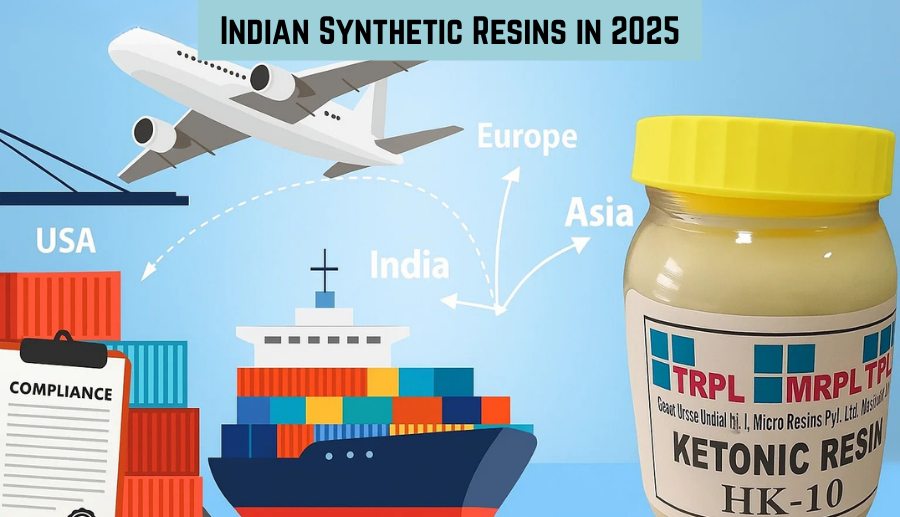
India has established itself as a significant player in the global synthetic resin market, with a strong manufacturing base, competitive pricing, and a wide range of resin types catering to industries such as coatings, adhesives, automotive, packaging, and electronics. As we in 2025, Indian resin exporters are eyeing new growth opportunities while navigating evolving regulatory landscapes. This article explores the most promising export destinations for Indian synthetic resins in 2025, along with country-specific compliance requirements, market potential, and demand trends for key resin categories.

United States: High Demand for High-Performance and Eco-Compliant Resins
The U.S. remains a top market for Indian synthetic resin exports, especially for Polyurethane Resins, Reactive Polyamide Resins, UV Oligomers, and Water Base Acrylic Emulsions used in paints, coatings, and packaging. The market favors high-performance, low-VOC, and REACH-compliant products. Exporters must adhere to EPA standards, TSCA inventory listings, and safety data sheet (SDS) documentation. There’s growing demand for Phenolic Resins in automotive and electronics sectors as well.
Germany: Advanced Applications and Stringent Environmental Regulations
As a key player in Europe’s industrial and chemical sectors, Germany imports Rosin Modified Maleic Resins, Polyvinyl Butyral Resins, and Synthetic Ketonic Resins for applications in coatings, laminates, and adhesives. Indian exporters must ensure REACH registration, CLP labeling, and conformity to EU Green Deal standards. Demand is rising for low-emission, sustainable resin systems, particularly in the automotive and renewable energy sectors.
China: Expanding Manufacturing Base and Competitive Pricing Needs
China is a significant importer of Fumaric Resin, Non-Reactive Polyamide Resin, and Adhesion Promoters, primarily for use in adhesives, construction, and automotive markets. While pricing remains a crucial factor, Indian exporters must navigate China’s stringent quality inspections and chemical registration under the China REACH framework. Growth is expected in the electronics and EV coatings segments.
South Korea: Specialty Resins for Electronics and Automotive
South Korea’s tech-driven industries drive demand for Rosin Modified Phenolic Resins, Polyurethane Resins, and Titanium Acetylacetonate Chelates in electronics and performance coatings. K-REACH compliance, product safety certification, and clean manufacturing practices are mandatory. Exporters with advanced formulations and consistent quality are well-positioned to gain market share.
Brazil: Growing Infrastructure and Packaging Industries
Brazil offers expanding demand for Water Base Acrylic Emulsions, Dimerized Rosin, and Alkyl Phenolic Resins, mainly in construction, flexible packaging, and wood coatings. Importers seek cost-effective, eco-friendly solutions. Exporters should align with Brazil’s ANVISA and IBAMA regulatory bodies and ensure detailed chemical safety documentation.
Turkey: A Key Hub for Regional Resin Re-exports
Turkey is emerging as a regional hub for Non-Reactive Polyamide Resins, Adhesion Promoters, and Rosin Modified Ester Gums, especially for textile coatings, automotive refinishing, and industrial adhesives. While not as stringent as the EU, Turkish standards are increasingly aligned with European norms. Exporters should prepare for customs clearance challenges and tariff documentation.
UAE and Saudi Arabia: Infrastructure-Driven Resin Demand
The Gulf region, particularly the UAE and Saudi Arabia, imports Polyurethane Resins, Phenolic Resins, and Fumaric Resins for construction chemicals, paints, and corrosion-resistant coatings. Compliance with GSO (Gulf Standards Organization), SASO, and stringent labeling norms is required. There’s also a notable uptick in eco-compliant and fire-retardant resin systems.
Vietnam and Indonesia: Cost-Sensitive Markets with Rising Industrial Needs
Southeast Asian countries are seeking affordable, high-performance resins like Synthetic Ketonic Resins, Water-Based Acrylic Emulsions, and Adhesion Promoters for furniture, footwear, and flexible packaging industries. Indian exporters must compete with Chinese suppliers while meeting ASEAN trade and chemical registration standards.
Japan: High Precision Requirements and Preference for Purity
Japan’s stringent quality expectations make it a viable but challenging market for Polyvinyl Butyral Resins, Titanium Acetylacetonate Chelates, and Rosin Modified Phenolic Resins used in electronics and high-end coatings. Products must comply with JIS standards, METI notifications, and detailed product traceability documentation. Success depends on consistency, purity, and strong technical support.

Egypt and South Africa: Emerging Markets with Infrastructure Boom
These African nations are increasingly importing Rosin Modified Ester Gums, Alkyl Phenolic Resins, and Water-Based Acrylic Emulsions for paints, sealants, and civil construction applications. While less regulated than Western markets, proper labeling, safety certifications, and export documentation remain crucial for market entry.
Conclusion
In 2025, India’s synthetic resin exporters are well-positioned to tap into a diverse range of international markets, from highly regulated Western economies to rapidly developing regions in Asia, Africa, and Latin America. Success lies in understanding each country’s regulatory landscape, market demand, and resin-specific applications. Exporters must continue to invest in compliance readiness, product customization, and sustainability to maintain competitiveness. With strategic planning and innovation, India can further solidify its role as a global leader in synthetic resin exports.
- Phenolic Resin Manufacturing Process: From Raw Material to Finished Product
- Questions to Ask a Phenolic Resin Manufacturer Before Placing an Order
- Alkyl Phenol Formaldehyde Resins Market Demand in Asia and Middle East
- Alkyl Phenol Formaldehyde Resin vs Conventional Phenolic Resin
- What Is Alkyl Phenol Formaldehyde Resin and Where Is It Used