


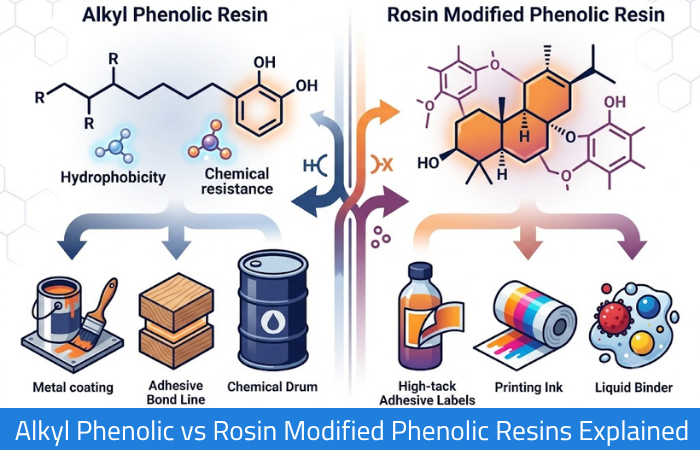
Formulators working with phenolic based binder systems often need to choose between alkyl phenolic resin and rosin modified phenolic resin, two closely related but chemically distinct product families that serve different roles across adhesives, coatings and printing ink applications. While both resins share a phenolic backbone, their raw material composition, performance characteristics and typical applications differ significantly. This article clarifies the difference between alkyl phenolic resin and rosin modified phenolic resin, helping formulators select the correct chemistry for their specific project requirements.
Chemical Composition of Alkyl Phenolic Resin
Alkyl phenolic resin is produced by reacting an alkyl substituted phenol, commonly para tertiary butylphenol, with formaldehyde under controlled conditions to form a resin with excellent tack and adhesion properties. The alkyl substitution on the phenol ring improves compatibility with rubber and elastomeric systems, which is why alkyl phenolic resin is widely used as a tackifying resin in rubber based adhesives, contact cements and footwear bonding applications. Depending on the synthesis conditions, alkyl phenol formaldehyde resin can be produced as either a heat reactive resole type or a non heat reactive novolak type, each offering different curing behavior and compatibility with various adhesive and coating systems.
Chemical Composition of Rosin Modified Phenolic Resin
Rosin modified phenolic resin, by contrast, is created by combining rosin or rosin derivatives with phenol and formaldehyde, then esterifying the resulting condensate with glycerol or pentaerythritol to produce a resin with high softening point and good compatibility with drying oils. This combination of rosin and phenolic chemistry gives rosin modified phenolic resin strong film forming properties, fast drying characteristics and good gloss, making it a preferred binder in offset printing inks, varnishes and certain adhesive formulations. Unlike alkyl phenolic resin, which draws its performance primarily from the phenolic component alone, rosin modified phenolic resin performance depends heavily on the quality and grade of rosin used as a starting material.
Performance Differences in Adhesion and Tack
One of the clearest distinctions between these two resin families lies in adhesion behavior. Alkyl phenolic resin is specifically valued for its tackifying properties in rubber based adhesive systems, providing strong initial tack and peel adhesion to substrates such as leather, textiles and various plastics used in footwear and general purpose bonding applications. Rosin modified phenolic resin, while also contributing to adhesive bond strength in certain formulations, is more commonly selected for its film forming and gloss properties in printing inks and varnishes rather than its tackifying performance. Formulators needing strong initial tack for rubber adhesive applications typically reach for alkyl phenolic resin, while those needing high gloss, fast drying ink vehicles typically select rosin modified phenolic resin instead.
Heat Resistance and Thermal Stability Comparison
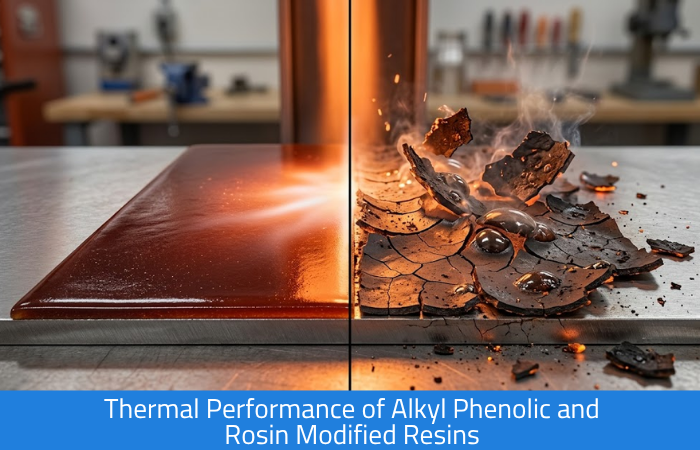
Alkyl phenolic resin generally offers better heat resistance and thermal stability compared with rosin modified phenolic resin, since the alkyl phenol formaldehyde backbone is inherently more resistant to thermal degradation than the ester linkages present in rosin modified systems. This heat resistance advantage makes alkyl phenolic resin more suitable for applications where the finished bond or coating may be exposed to elevated temperatures during processing or service life, such as certain industrial adhesive bonding operations. Rosin modified phenolic resin, while offering good performance at ambient and moderately elevated temperatures typical of printing and coating applications, is less suited to applications requiring sustained high temperature exposure due to the potential for ester bond degradation over time.
Solubility and Solvent Compatibility
Solubility characteristics also differ between the two resin types, influencing which solvent systems and application methods are practical for each. Alkyl phenolic resin typically dissolves well in aromatic solvents and blends readily with rubber compounds during adhesive manufacturing, supporting solvent based contact adhesive production. Rosin modified phenolic resin dissolves well in tar, ester and turpentine type solvents and blends effectively with vegetable oils and alkyd resins, making it particularly well suited to oil based printing ink and varnish formulations where compatibility with drying oils is essential for proper film formation and gloss development.
Cost and Raw Material Availability Considerations
Cost structures for alkyl phenolic resin and rosin modified phenolic resin can vary depending on regional raw material availability, since rosin modified phenolic resin depends on gum rosin or wood rosin supply, which is subject to agricultural and forestry market fluctuations, while alkyl phenolic resin relies more directly on petrochemical derived alkylphenol feedstock. Formulators should monitor raw material market conditions for both resin families when planning long term procurement, since price volatility in rosin markets can sometimes make alkyl phenolic resin comparatively more cost stable, while shifts in petrochemical pricing can have the opposite effect depending on broader market conditions at any given time.
Choosing Between Alkyl Phenolic Resin and Rosin Modified Phenolic Resin
Color and Appearance Differences in Finished Products
Color development is another practical difference formulators encounter between these two resin families. Alkyl phenolic resin, particularly the non heat reactive novolak type, tends to remain relatively light in color and stable over time, which is important for adhesive applications where visible yellowing at the bond line could affect product appearance. Rosin modified phenolic resin often carries a deeper amber to brown color inherent to the rosin component, which is generally acceptable in printing ink and varnish applications where color is either masked by pigment or expected as part of the traditional varnish appearance. Formulators working on light colored or clear adhesive products should pay particular attention to the color stability of their chosen alkyl phenolic resin grade, since even subtle color shifts can be noticeable in transparent or light colored bonded assemblies.
Testing Methods Used to Differentiate the Two Resin Types
Quality control laboratories typically use a combination of softening point, acid value and solubility testing to characterize both alkyl phenolic resin and rosin modified phenolic resin, though the acceptable ranges and target values differ significantly between the two chemistries. Softening point testing helps confirm that a given batch of resin will perform as expected during hot melt processing or adhesive compounding, while acid value testing is particularly important for rosin modified phenolic resin, since it reflects the degree of esterification achieved during manufacturing and directly influences compatibility with drying oils. Formulators receiving new resin shipments should run these standard tests on incoming material regardless of which resin type is being used, since batch to batch variation can occur even from established phenolic resin manufacturers and early detection prevents downstream formulation problems.
The decision between alkyl phenolic resin and rosin modified phenolic resin ultimately depends on the specific application requirements of the formulation being developed. Adhesive formulators working on rubber based contact cements, footwear bonding or general purpose tackifier applications should generally favor alkyl phenolic resin for its superior tack and heat resistance properties. Ink and varnish formulators seeking high gloss, fast drying film formation with good compatibility with drying oils should generally favor rosin modified phenolic resin. Some specialized formulations may even combine both resin types to capture complementary benefits, though this requires careful compatibility testing to confirm the blend performs as intended across the full range of application and end use conditions.
Blending Considerations for Hybrid Formulations
Some formulators explore blending alkyl phenolic resin with rosin modified phenolic resin, or with other complementary resin chemistries, to capture properties that neither resin delivers fully on its own, such as combining the tack of alkyl phenolic resin with the gloss and drying characteristics of a rosin based system. These hybrid approaches require careful compatibility testing, since the two resin families differ in polarity, solvent compatibility and thermal behavior, and an incompatible blend can result in phase separation, cloudiness or inconsistent film formation. Formulators considering this route should start with small scale trial blends at varying ratios, evaluating film clarity, adhesion and drying speed before scaling up, and should consult their resin suppliers for guidance on which combinations have already been proven compatible in similar applications.
Sourcing Quality Phenolic Resins for Your Application
Because both alkyl phenolic resin and rosin modified phenolic resin performance depend heavily on consistent raw material quality and controlled manufacturing processes, sourcing from an experienced phenolic resin manufacturer ensures reliable results across production batches. Tridev Group manufactures alkyl phenolic resin used in rubber adhesive and tackifier applications, supporting formulators who need dependable heat resistance and adhesion performance for demanding bonding applications. Working with a knowledgeable resin manufacturer also provides access to technical guidance that helps formulators select the correct resin chemistry, and the correct grade within that chemistry, for their specific application requirements. Buyers evaluating new suppliers should request full technical documentation, including softening point range and typical batch variation data, to confirm the resin meets their formulation tolerances before committing to larger volume purchases.
Understanding the fundamental differences between alkyl phenolic resin and rosin modified phenolic resin, from raw material composition through performance characteristics and typical applications, helps formulators make informed decisions rather than treating these two phenolic resin families as interchangeable options. Selecting the right chemistry for your specific adhesive, coating or ink application, and partnering with an experienced phenolic resin manufacturer such as Tridev Group, ensures consistent performance and reduces the risk of formulation issues down the line.
- Common Challenges in Alkyl Phenolic Resin Formulations
- Alkyl Phenolic Resin vs Rosin Modified Phenolic Resin: What Is the Difference
- UV Curable Urethane Acrylate Technologies – Future Trends
- Urethane Acrylate Oligomers for UV Curable Coatings Explained
- Water Based Acrylic Resins vs Solvent Based Resins: Which Is Better