

In this article
Alkyl phenolic resin adhesives need separate checks for initial tack, open time and conditioned bond strength. This guide covers comparable trial conditions, timed assembly intervals, failure mode recording and combined interpretation, with Tridev Group supplying the resin for adhesive applications.
Why Does Alkyl Phenolic Resin Adhesive Performance Need Three Separate Measurements?
An assembly operator presses two coated parts together and the joint grips firmly at once, yet a week later, parts joined slightly later in the shift peel apart far more easily than the first ones. Initial tack, open time and final bond strength each explain a different part of that story, so laboratories and assembly teams need to measure them separately.
For teams selecting phenolic resin for adhesive formulations, Tridev Group offers alkyl phenolic resin, also described as alkyl phenol formaldehyde resin. The performance of a phenolic resin adhesive depends on the complete formulation, substrates and assembly conditions.
What Do Initial Tack, Open Time and Final Bond Strength Mean in Alkyl Phenolic Resin Adhesives?
In an alkyl phenolic resin adhesive, initial tack is the early grab, or resistance to separation, that a joint shows under defined contact conditions. Open time is the permitted interval between application and assembly under specified conditions.
Final bond strength is measured after a defined conditioning or curing period using a suitable test. The exact meaning of tack and open time must match the adhesive system and the procedure used to evaluate it.
Open time is not pot life, which describes how long a mixed adhesive stays usable in its container. It is also distinct from any minimum drying or flash off interval that must pass before surfaces can be joined.
- Initial tack: Check early handling strength at a defined contact pressure, contact duration and assessment time.
- Open time: Compare planned assembly intervals while keeping drying or activation steps and subsequent conditioning consistent.
- Final bond strength: Test conditioned joints using a defined specimen geometry, loading method and conditioning period.
A favourable result for one property does not establish the other two. Each must be confirmed on its own terms.
How Should Laboratories Set Comparable Conditions When Trialling Alkyl Phenol Resins?
Fair comparison starts before any measurement. Use substrates of the same material and batch, record surface condition, prepare them to the approved procedure and bring specimens to the test environment before coating. Control application weight and coated area, note whether one or both surfaces receive adhesive, and keep assembly pressure, contact duration, temperature and humidity consistent from preparation through to testing.
Wet application weight and dry adhesive deposit are not the same thing. When formulations containing Alkyl Phenol Resins differ in solids content, equal wet weights can leave unequal dry films, so state whether the comparison uses equal wet weight or equal dry deposit rather than assuming identical film thickness.
When comparing formulations, work from a documented reference formulation and change only one variable at a time, since hidden differences can masquerade as resin effects. A resin free control is worth including only when it is technically meaningful for the adhesive system under study.
How Can Initial Tack Be Evaluated in a Phenolic Resin Adhesive?
Tack evaluation focuses on the first moments of contact. Agree the coating to contact interval and the acceptance criteria before work begins.
Instrumented tack measurement records a force under controlled conditions, while a handling assessment judges whether a part stays in place during the next production step. A phenolic resin adhesive that passes a handling check may still need instrumented data before formulations can be ranked.
When an alkyl phenol resin grade is being screened, a subjective finger test alone cannot establish reproducible tack. Prepare repeat specimens and record variability as the laboratory procedure requires. Where handling checks are used, describe the handling step precisely, including part orientation and how the part is moved.
How Do You Compare Open Time in Alkyl Phenolic Resin Adhesives at Defined Assembly Intervals?
For adhesives formulated with alkyl phenol resins, assess open time by joining identical specimens at planned intervals after application, following any drying or activation instructions. Record actual elapsed times rather than labels such as short or long, then tabulate conditioned results against time to see where performance begins to decline.
Give every specimen the same post assembly conditioning period, even when all samples are tested together. The trial must also establish the latest acceptable assembly point, and the ideal window is the one that suits the production line.
How Is Final Bond Strength Assessed With Phenolic Resin for Adhesive Applications?
Strength evaluation asks whether the conditioned joint suits its intended service. Choose a loading mode, such as peel or shear, only where it reflects how the joint is stressed and the procedure supports it.
Time conditioning from assembly rather than from application, and record bonded area and loading rate with each result. Where full cure has not been confirmed, report results as strength after the specified conditioning period.
Compare results obtained using equivalent specimen geometries, loading conditions and conditioning histories, with units converted consistently where necessary. When evaluating phenolic resin for adhesive formulations, use acceptance targets from the customer specification or validated laboratory procedure.
How Should Failure Modes Be Recorded in Alkyl Phenolic Resin Adhesive Evaluation?
In phenolic resin adhesive trials, a strength value means little without knowing where the joint broke. Inspect each specimen and classify the failure location alongside the measured force.
- Interfacial failure: separation at the boundary between adhesive and substrate
- Cohesive failure: fracture within the adhesive layer itself
- Substrate failure: the substrate breaks before the bond
- Mixed failure: more than one of these locations on the same specimen
Where the joint combines different substrates, record which interface failed. Substrate failure shows the bond outlasted the material, but it is not an exact measure of the adhesive’s maximum capability.
Resist assigning a single cause to any pattern without supporting evidence, since contamination, preparation, conditioning and formulation can produce similar fracture surfaces. Retaining or photographing failed specimens allows the classification to be reviewed later.
How Should Alkyl Phenolic Resin Trial Results Be Interpreted Together?
Review the tack, open time and strength results together to reach a single application decision. Where a result sits near an acceptance limit, confirm it through repeat trials before relying on it.
Tradeoffs may appear, such as improved early grab alongside a narrower window, but they do not occur in every system. Tridev Group notes that raising resin dosage for tack can sometimes affect heat resistance or ageing, so each balance must be tested rather than assumed.
A complete trial record should capture:
- Formulation details and resin grade
- Application and assembly records
- Tack assessment method and results
- Acceptable assembly intervals
- Conditioned strength with failure mode
- Repeatability and any unresolved variation
When selecting a Tridev Group Alkyl Phenolic Resin grade, base the choice on verified product information and your own trial data.
About Tridev Group as an Alkyl Phenolic Resin Supplier
Tridev Group is an alkyl phenolic resin manufacturer in India, based in Vapi, Gujarat, supplying domestic and export markets. Its Alkyl Phenolic Resin range is offered for adhesive and coating applications, including rubber based adhesives for industrial bonding and footwear.
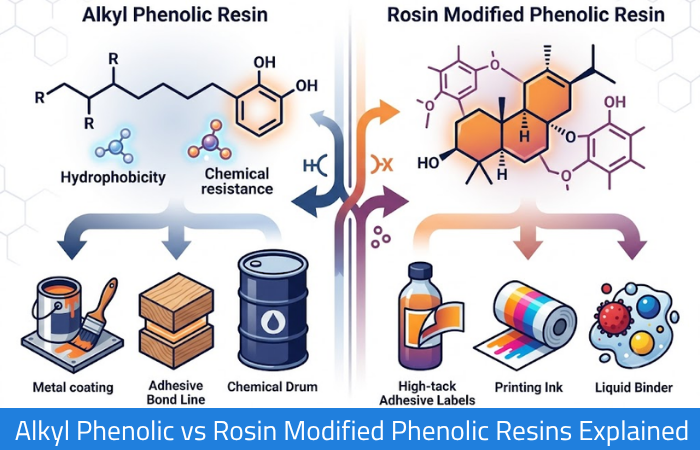
Tridev Group also explains how alkyl phenolic resin differs from rosin modified phenolic resin. When enquiring, share your adhesive system, substrates, assembly needs and evaluation criteria.
What Should Guide Final Alkyl Phenolic Resin Adhesive Selection?
Initial tack, open time and conditioned bond strength should each meet the application requirements before production approval. Additional service, durability and process requirements must also be satisfied. After a formulation change, reassess all properties that the change could affect. To discuss alkyl phenolic resin options for your adhesive system, contact Tridev Group.
- Title (60): Alkyl Phenolic Resin Adhesives: Tack, Open Time and Strength
- Description (141): Learn how to test initial tack, open time and bond strength in alkyl phenolic resin adhesives. Source alkyl phenolic resin from Tridev Group.
- URL: /alkyl-phenolic-resin-adhesive-tack-open-time-bond-strength/
- \
Need Technical Information or a Product Quote?
Our team responds with specifications, samples and pricing for your application.