


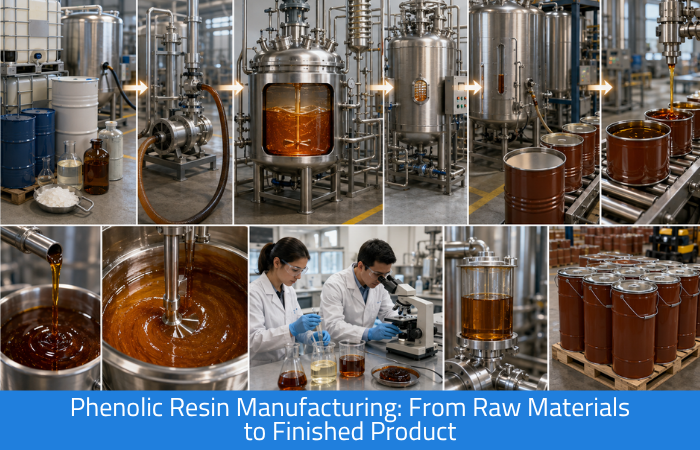
Understanding how phenolic resin is manufactured, from raw material selection through the final packaged product, helps buyers and formulators appreciate the quality control considerations that influence resin performance in their own applications. Phenolic resin manufacturing involves precise control of chemical reaction conditions, careful raw material sourcing and rigorous testing throughout the production process. This article walks through the key stages of phenolic resin manufacturing and explains why each step matters for the consistency and performance buyers depend on.
Raw Material Selection and Quality Control of Phenolic Resin
Phenolic resin manufacturing begins with sourcing high purity phenol, or in the case of alkyl phenolic resin, an appropriately alkylated phenol such as para tertiary butylphenol, along with formaldehyde as the second primary reactant. The purity and consistency of these raw materials directly affects the final resin’s molecular weight, color and reactivity, making raw material quality control one of the most important steps in the entire manufacturing process. Reputable phenolic resin manufacturers establish strict incoming quality specifications for their phenol and formaldehyde suppliers, testing each raw material batch before it enters production to catch any impurities or concentration variations that could compromise resin quality further down the process.
The Condensation Reaction Between Phenol and Formaldehyde
The core chemical transformation in phenolic resin manufacturing occurs during the condensation reaction between phenol and formaldehyde, which takes place under carefully controlled temperature, pressure and catalyst conditions within a reactor vessel. Depending on whether the manufacturer is producing a resole or novolak type resin, the molar ratio of formaldehyde to phenol and the choice of acidic or alkaline catalyst are adjusted accordingly, since these parameters determine whether the resulting resin will be heat reactive or require an external curing agent. Precise temperature control during this reaction stage is essential, since deviations can lead to uncontrolled polymerization, off specification molecular weight or unwanted side reactions that compromise the quality of the finished resin.
Rosin Modification and Esterification for Rosin Modified Phenolic Resin
For manufacturers producing rosin modified phenolic resin specifically, an additional processing stage involves reacting the phenolic condensate with rosin or rosin derivatives, followed by esterification with glycerol or pentaerythritol under vacuum conditions to achieve the desired softening point and acid value. This esterification step requires careful monitoring of reaction temperature and vacuum level, since incomplete esterification results in a resin with elevated acid value that may not perform as expected in ink or phenolic resin varnish formulations requiring compatibility with drying oils. Manufacturers producing this resin type typically sample the reaction batch periodically during esterification, testing acid value and softening point to confirm the reaction has progressed to the target specification before proceeding to the next production stage.
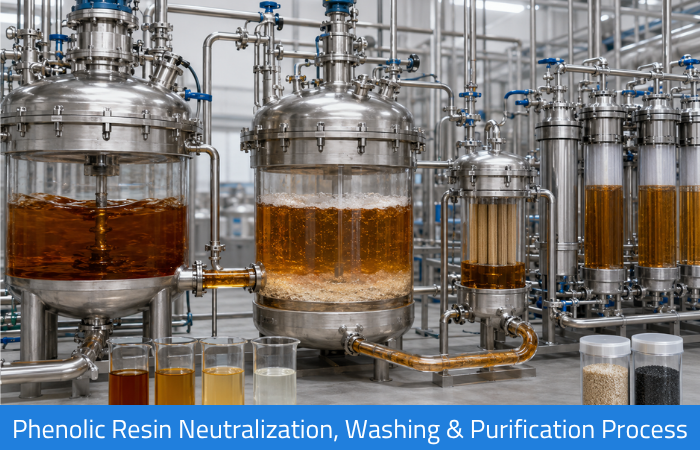
Neutralization, Washing and Purification Steps in Phenolic Resin Manufacturing
Following the primary condensation or esterification reaction, phenolic resin manufacturing typically includes neutralization and washing steps designed to remove residual catalyst, unreacted raw materials and byproducts that could otherwise affect resin color, odor or long term stability. This purification stage is particularly important for resin grades intended for applications sensitive to residual impurities, such as adhesives used in footwear or food adjacent packaging applications where odor and extractable content matter significantly to the end customer. Manufacturers with well designed purification processes achieve cleaner, more consistent resin batches, while inadequate purification can leave residual impurities that cause color instability, odor issues or reduced shelf life in the finished product.
Our Other Products
Synthetic Ketonic ResinPhenolic Resin Molecular Weight Adjustment and Viscosity Control
Once the primary reaction and purification steps are complete, manufacturers often adjust the resin’s molecular weight and viscosity to match the target specification for a specific grade, sometimes through controlled further heating to advance the reaction or through dilution with an appropriate solvent for solution grade products. This stage requires careful process control since overheating can push molecular weight beyond the target range, resulting in a resin with excessively high softening point or reduced solubility, while insufficient processing time can leave the resin below target specification. Manufacturers typically use in process testing at this stage, sampling viscosity and softening point at intervals to confirm the resin is tracking toward the correct final specification.
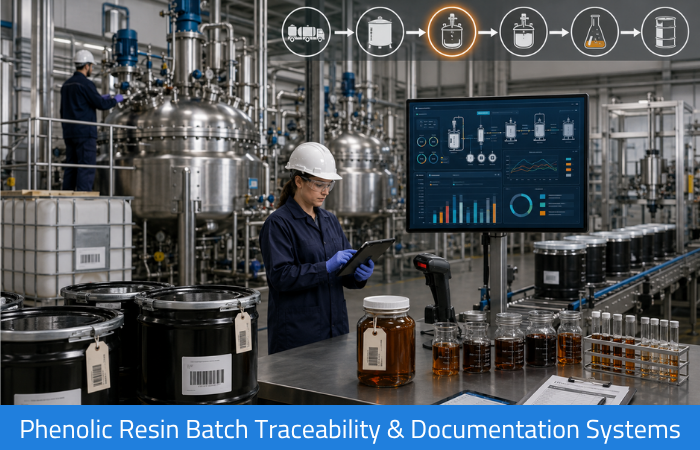
Phenolic Resin Batch Documentation and Traceability Systems
Throughout the entire manufacturing process, from raw material receipt through final packaging, disciplined manufacturers maintain detailed batch records that document reaction conditions, in process test results and any deviations or corrective actions taken during production. This documentation serves multiple purposes, supporting internal quality investigations if issues arise, providing the data needed to generate certificates of analysis for customers, and enabling full traceability back to specific raw material lots if a quality question ever needs to be investigated. Buyers evaluating a phenolic resin manufacturer should ask to see examples of this batch documentation, since the depth and organization of these records often reflects the overall quality culture and process discipline of the manufacturing operation as a whole.
Scale Up Considerations From Laboratory to Phenolic Resin Production Batch
Many phenolic resin manufacturers develop new grades or custom formulations at laboratory scale before scaling up to full production batch sizes, and this scale up process introduces its own set of technical challenges that skilled manufacturers must manage carefully. Reaction kinetics, heat transfer and mixing efficiency can all behave differently at production scale compared with small laboratory reactors, meaning a formulation that performs perfectly in a laboratory trial may require process adjustments before it can be reliably reproduced in full scale production equipment. Manufacturers with strong scale up expertise typically run intermediate pilot scale batches before committing to full commercial production, reducing the risk of quality surprises when a new resin grade transitions from development into regular manufacturing.
Phenolic Resin Quality Testing Before Packaging
Before any phenolic resin batch is approved for packaging and shipment, manufacturers conduct a battery of quality control tests including softening point, color, acid value where applicable, solubility and sometimes gel time or reactivity testing depending on the specific resin type and intended application. This final quality checkpoint ensures that only batches meeting the full specification range reach customers, and reputable manufacturers maintain detailed records of these test results that can be provided to buyers as certificates of analysis accompanying each shipment. Batches that fall outside specification at this stage are typically either reprocessed, if the deviation allows for correction, or rejected entirely rather than being shipped to customers, protecting the manufacturer’s quality reputation and the buyer’s downstream production reliability.
Our Other Products
Non Reactive Polyamide ResinPhenolic Resin Packaging, Storage and Handling Considerations
The final stage of phenolic resin manufacturing involves packaging the resin appropriately for its physical form, whether solid flake, pastille or liquid solution, using containers and packaging materials that protect the product from moisture, contamination and degradation during storage and transport. Manufacturers must also consider shelf life stability during this stage, since improper packaging can allow moisture ingress or oxidation that gradually degrades resin properties even before the product reaches the customer’s facility. Clear labeling with batch numbers, manufacturing dates and recommended storage conditions helps buyers manage their own inventory effectively and supports traceability throughout the supply chain in case any quality questions arise after delivery.
Environmental Controls and Waste Management During Phenolic Resin Production
Modern phenolic resin manufacturing also incorporates environmental controls to manage formaldehyde emissions, wastewater treatment and byproduct disposal generated during the condensation and purification stages of production. Manufacturers investing in effective emission control systems and wastewater treatment infrastructure not only reduce their environmental footprint but also protect worker health and support compliance with increasingly strict regional environmental regulations. Buyers who prioritize sustainability in their own supply chain should ask prospective phenolic resin manufacturers about their environmental management practices, since a manufacturer with weak environmental controls may present compliance risk that extends into the buyer’s own supply chain documentation and sustainability reporting.
Why Understanding Phenolic Resin Process Matters for Buyers
Buyers who understand the phenolic resin manufacturing process are better equipped to ask informed questions during supplier evaluation, recognize the quality control checkpoints that matter most for their specific application, and interpret technical data sheets and certificates of analysis more effectively. This understanding also helps buyers appreciate why batch to batch consistency requires disciplined process control at every stage, from raw material sourcing through final packaging, rather than assuming that phenolic resin manufacturing is a simple, low variability process. Tridev Group is an established resins manufacturer that produces phenolic resin and alkyl phenolic resin through carefully controlled production processes, supporting formulators who need consistent quality and detailed technical documentation for their adhesive, coating and rubber compounding applications.
The phenolic resin manufacturing process involves multiple carefully controlled stages, from raw material selection through reaction chemistry, purification, molecular weight adjustment and final quality testing before packaging. Buyers who understand these process fundamentals are better positioned to evaluate potential suppliers thoroughly and appreciate the technical discipline required to consistently produce high quality phenolic resin, particularly when working with an experienced manufacturer such as Tridev Group who maintains rigorous process control throughout every stage of production. Buyers who take the time to understand these process fundamentals during supplier evaluation are better positioned to ask targeted, meaningful questions rather than relying solely on marketing claims when comparing potential phenolic resin partners for their business.
- Phenolic Resin Manufacturing Process: From Raw Material to Finished Product
- Questions to Ask a Phenolic Resin Manufacturer Before Placing an Order
- Alkyl Phenol Formaldehyde Resins Market Demand in Asia and Middle East
- Alkyl Phenol Formaldehyde Resin vs Conventional Phenolic Resin
- What Is Alkyl Phenol Formaldehyde Resin and Where Is It Used