


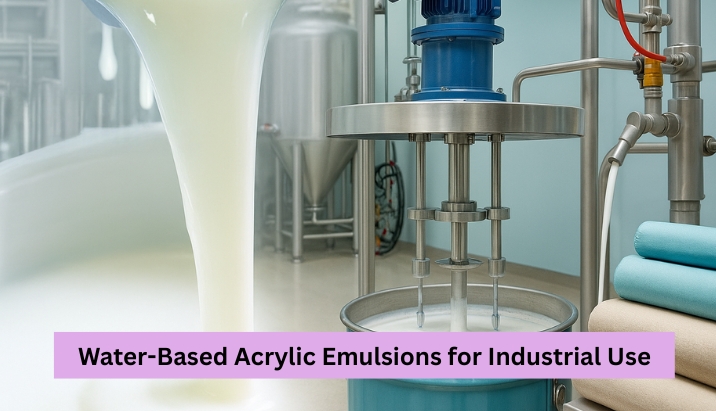
The Rising Demand for Water-Based Acrylic Emulsions in Industrial Applications
Across the industrial coatings and printing sectors, the shift toward water-based acrylic emulsions has become a defining movement in recent years. Driven by environmental regulations, performance demands, and evolving sustainability goals, manufacturers and converters are seeking advanced binders and coating resins that deliver both technical excellence and ecological safety.
Among these innovative materials, the HICOAT series of water-based acrylic emulsions has emerged as a trusted choice for printing inks, overprint varnishes (OPV), and coating binders. These emulsions, available in variants such as HICOAT-89, HICOAT-74, HICOAT-106, and HICOAT-61, offer superior adhesion, gloss, film formation, and print performance across different substrates and printing methods.
Unlike traditional solvent-based coatings, which release volatile organic compounds (VOCs) and pose environmental challenges, water-based acrylic emulsions deliver low-VOC, safer, and high-performing solutions. Their unique chemistry enables exceptional pigment dispersion, printability, and surface protection key attributes for industries like flexographic and gravure printing, packaging, and paper coating. This article explores the technical and practical benefits of HICOAT emulsions in industrial applications, explaining how each product’s specific formulation serves different end uses. From viscosity and solids content to print performance and sustainability, the HICOAT series demonstrates how modern acrylic emulsion technology can redefine industrial coating performance.

Understanding Acrylic Emulsion Technology
Acrylic emulsions are water-dispersed polymer systems composed mainly of acrylic or methacrylic monomers. When polymerized, these monomers create fine particles suspended in water, forming a stable emulsion. Upon application and drying, the water evaporates, and the dispersed particles coalesce into a continuous film, providing protection, adhesion, and gloss to the coated surface.
How They Differ from Solvent-Based Systems
Traditional solvent-based coatings rely on organic solvents as carriers for polymer resins. While they often deliver strong performance, they emit VOCs, which contribute to air pollution and workplace hazards. In contrast, water-based acrylic emulsions replace these solvents with water, significantly reducing VOC emissions while maintaining and often exceeding the functional performance of solvent-based alternatives.
In industrial applications, this translates to:
- Improved environmental compliance
- Reduced worker exposure to harmful fumes
- Enhanced safety in handling and storage
- Simplified cleanup and lower disposal costs
Water-based emulsions also provide excellent compatibility with various pigments and additives, allowing manufacturers to fine-tune formulations for specific performance outcomes like gloss, hardness, flexibility, or print adhesion.
Key Advantages of Water-Based Acrylic Emulsions in Industry
When it comes to industrial use particularly in printing inks and coatings the benefits of water-based acrylic emulsions are extensive.
1. Environmental Benefits
They emit minimal or no VOCs, meeting international environmental regulations such as those enforced by EPA, REACH, and similar bodies. This makes them ideal for markets increasingly adopting eco-conscious manufacturing, including Brazil and Mexico, where sustainability in industrial processes is gaining strong momentum.
2. Performance Benefits
Despite being water-based, these emulsions provide high durability, gloss, and adhesion comparable to, and sometimes exceeding, solvent-based systems. They maintain color brightness and surface smoothness, crucial for high-quality print finishes.
3. Application Efficiency
Acrylic emulsions are compatible with existing industrial printing setups such as flexographic and gravure printing machines without major changes to the process. Their quick drying times improve productivity while minimizing defects like smudging or offset.
4. Cost and Safety Advantages Since they are non-flammable and non-toxic, they reduce risks during storage and transport. Maintenance costs also drop, as cleaning equipment with water is simpler and cheaper than using solvent-based cleaners.
Overview of the HICOAT Series Acrylic Emulsions
The HICOAT series represents a line of high-performance water-based acrylic emulsions developed to meet the evolving needs of industrial printing, coating, and packaging applications. Each grade in this series offers specific performance characteristics tailored for different substrates and printing methods—particularly in flexographic, gravure, and paper printing systems.
These emulsions are formulated to serve as:
- Binders for overprint varnishes (OPVs)
- Let-down vehicles for printing inks
- Film-forming agents to enhance gloss, adhesion, and durability
Below is an overview of the core HICOAT products and their key physical parameters:
| Product | Appearance | Viscosity (FC No.4 @ 30°C) | % Solid Content (110°C, 1.5 hr) | Primary Applications |
| HICOAT-89 | Off White Emulsion | 100–140 Sec | 47 ± 2% | Printing Inks, Overprint Varnishes; Binder for water-based OPVs and let-down vehicle for flexographic & gravure inks |
| HICOAT-74 | Off White Emulsion | 90–110 Sec | 47 ± 2% | Printing Inks, Overprint Varnishes (film-based applications); Glossy binder for OPVs and inks on films |
| HICOAT-106 | Off White Emulsion | 50–60 Sec | 42 ± 1% | Paper applications; Pre-print and post-print inks; Overprint varnish |
| HICOAT-61 | Light Amber Clear Solution | 500 ± 50 CPs | 39 ± 2% | Water-based inks and OPVs; Excellent pigment dispersion, gloss, and printability; Let-down vehicle for flexographic inks |
Each variant plays a specialized role in enhancing print quality, durability, and surface performance—critical factors in competitive industrial markets like packaging, labeling, and publishing.
HICOAT-89: Binder for Printing Inks and Overprint Varnishes
HICOAT-89 is a robust off-white acrylic emulsion engineered for industrial printing inks and overprint varnishes. With a balanced viscosity of 100–140 seconds (FC No.4 @ 30°C) and a solid content of 47 ± 2%, it delivers excellent film formation, adhesion, and gloss—key attributes required in the flexographic and gravure printing industries.
Industrial Performance
This emulsion acts as a binder in water-based overprint varnishes (OPVs), imparting a smooth, glossy finish that enhances print clarity and scuff resistance. When used as a let-down vehicle in printing ink formulations, HICOAT-89 helps control ink flow, pigment dispersion, and drying speed—crucial for consistent color quality and uniform film deposition.
Benefits
- Superior gloss and clarity: Provides a rich, high-sheen finish that enhances printed visuals.
- Excellent adhesion: Bonds strongly to a variety of substrates, including coated and uncoated papers.
- Improved resistance: Adds durability against moisture, abrasion, and handling wear.
- Smooth flow and transfer: Ensures even ink laydown, preventing defects like streaking or mottling.
Applications
- Flexographic printing inks for paper and board
- Gravure inks for packaging films and foils
- OPV formulations for enhanced surface protection and finish
Its compatibility with other resins and additives also makes HICOAT-89 a versatile component for ink manufacturers aiming to produce environmentally friendly, high-performance coatings without sacrificing productivity.
HICOAT-74: Glossy Binder for Film-Based Printing Inks
When it comes to film-based printing applications, HICOAT-74 stands out for its exceptional gloss, clarity, and adhesion. This off-white emulsion, with a viscosity of 90–110 seconds and solids of 47 ± 2%, has been specially formulated for water-based printing inks and overprint varnishes used on plastic films such as polyethylene, polypropylene, and polyester.
Film Compatibility
In industrial packaging and labeling, maintaining adhesion and print quality on non-porous films is one of the toughest challenges. HICOAT-74’s chemistry is optimized for flexographic and gravure printing, providing excellent film wetting, quick drying, and scratch resistance.
Key Advantages
- High gloss retention: Ensures a mirror-like finish on flexible packaging films.
- Excellent print adhesion: Prevents ink lifting and delamination during handling or lamination.
- Good block resistance: Reduces sticking between printed surfaces during stacking or rewinding.
- Consistent viscosity and stability: Maintains print consistency even during long press runs.
Typical Applications
- Water-based gravure inks for flexible packaging
- Overprint varnishes for laminated films
- Flexographic inks for high-speed printing lines
By replacing solvent-based binders with HICOAT-74, industrial printers can significantly reduce VOC emissions while achieving the same or better optical brilliance and print durability. This makes it ideal for food packaging, labeling, and industrial product wraps, where both performance and compliance with environmental standards are essential.
HICOAT-106: Optimized for Paper Printing and Overprint Varnishes
HICOAT-106 is specifically tailored for paper-based printing applications, functioning effectively in both pre-print and post-print ink formulations. It features a lower viscosity (50–60 seconds) and a solid content of 42 ± 1%, which provides excellent film formation, flow, and surface leveling crucial for achieving premium finishes on paper substrates.
Performance on Paper
This emulsion is mainly used in overprint varnishes (OPVs) applied over printed paper or board. Its film-forming ability provides high transparency, gloss, and rub resistance, protecting printed materials during converting and distribution. In pre-print inks, HICOAT-106 contributes to smooth ink laydown and color stability, ensuring uniform visual appeal.
Key Features
- Excellent flow and leveling: Ensures even coating and high surface smoothness.
- Fast drying and recoatability: Supports quick turnaround times in production.
- Strong inter-coat adhesion: Ideal for multilayer printing applications.
- Improved surface resistance: Protects against abrasion and fingerprints.
Applications
- Overprint varnishes for magazines, cartons, and labels
- Water-based paper inks for packaging and publishing
- Industrial-grade coatings for printed board products
Its balance between film strength and flexibility makes HICOAT-106 a reliable binder for paper-based applications that require both aesthetic appeal and mechanical protection.
HICOAT-61: High-Gloss, Easy-to-Use Emulsion for Flexographic Inks
HICOAT-61 differs from the other emulsions in the series in both appearance and rheology. Presented as a light amber clear solution, it has a viscosity of 500 ± 50 CPs and a solid content of 39 ± 2%. Its clarity and flow make it particularly suited for flexographic inks, overprint varnishes, and coating systems where ease of formulation and superior printability are essential.
Technical Advantages
This emulsion exhibits excellent pigment dispersion, enabling vivid and uniform coloration across large printing runs. It provides high gloss and excellent ink transfer, making it ideal for industrial applications requiring sharp image reproduction and consistent finish.
Performance Benefits
- Easy handling and compatibility: Blends well with pigments, plasticizers, and additives.
- High gloss and transparency: Enhances surface appeal of printed materials.
- Excellent printability: Ensures smooth, clean impressions without plate buildup.
- Durability and flexibility: Maintains coating integrity even under mechanical stress.
Industrial Uses
- Flexographic printing inks for paper and film
- OPV systems for industrial packaging
- Surface coatings demanding high gloss and abrasion resistance
HICOAT-61’s formulation simplicity and superior transfer properties make it an ideal choice for industrial converters and ink makers aiming for consistent, high-performance results with minimal process adjustment.
Comparative Analysis of HICOAT Emulsions
To better understand how each HICOAT product performs in different industrial environments, it’s essential to analyze their comparative properties. Although all four are water-based acrylic emulsions, subtle differences in viscosity, solids content, and film-forming ability make them uniquely suited for specific end uses.
| Product | Primary Use | Viscosity (FC No.4 @30°C) | Solids (%) | Gloss Level | Substrate Compatibility |
| HICOAT-89 | Printing inks & OPVs | 100–140 sec | 47 ± 2 | High | Paper, board |
| HICOAT-74 | Film-based inks & varnishes | 90–110 sec | 47 ± 2 | Very High | Plastic films (PE, BOPP, PET) |
| HICOAT-106 | Paper inks & coatings | 50–60 sec | 42 ± 1 | Medium–High | Paper, cardboard |
| HICOAT-61 | Flexographic inks, OPVs | 500 ± 50 cps | 39 ± 2 | High | Paper, film |
Interpretation of Results
- HICOAT-74 exhibits the best film adhesion and gloss on non-porous films, making it indispensable in flexible packaging.
- HICOAT-89 balances viscosity and film strength, offering versatility across printing and coating formulations.
- HICOAT-106 provides smooth, paper-friendly coating behavior, ensuring consistent print appearance on absorbent substrates.
- HICOAT-61 stands out for its high pigment dispersion and flow, optimizing performance for flexographic systems where uniformity is key.
This comparative understanding helps manufacturers choose the ideal binder or let-down vehicle depending on the substrate, printing method, and desired finish.
Applications in the Printing and Packaging Industry
The printing and packaging sectors represent the largest industrial market for water-based acrylic emulsions. These industries require materials that not only enhance print aesthetics but also withstand mechanical handling, heat sealing, and exposure to moisture.
1. Flexographic Printing
Water-based flexographic inks formulated with HICOAT emulsions provide exceptional print definition, fast drying, and reduced plate fouling. This printing method is widely used in corrugated packaging, labels, and food wraps, where the combination of speed and environmental compliance is vital.
2. Gravure Printing
For high-resolution, continuous-tone printing, gravure systems rely on binders like HICOAT-74 and HICOAT-89. These emulsions allow inks to transfer smoothly from engraved cells to the substrate, ensuring crisp image reproduction with excellent clarity and gloss.
3. Overprint Varnishes (OPVs)
Overprint varnishes act as a protective topcoat over printed material. The HICOAT-89, 106, and 61 grades serve as ideal binders for OPVs, enhancing scuff resistance, moisture protection, and surface gloss. These varnishes are essential for preserving print quality in transport, storage, and end use.
4. Paper Coating and Labeling
HICOAT-106 is widely used in paper-based coating systems, offering smooth surface films with consistent optical properties. In label manufacturing, its clarity and durability ensure that printed labels remain legible and visually appealing throughout their lifecycle. By offering these performance enhancements, HICOAT emulsions contribute to greater production efficiency, reduced waste, and superior final product quality, helping converters and manufacturers meet strict customer and regulatory standards.
Performance Characteristics that Set HICOAT Apart
The HICOAT range has become a trusted solution for ink and coating formulators worldwide due to its distinct performance profile. Each product is engineered to meet industrial standards while minimizing environmental impact.
1. High Gloss and Clarity
Gloss is a major indicator of print quality. HICOAT emulsions, particularly HICOAT-74 and HICOAT-89, produce coatings with mirror-like surfaces that enhance the vibrancy and depth of printed images.
2. Excellent Adhesion and Flexibility
Whether on porous paper or non-porous film, these emulsions form films that strongly adhere without cracking or delaminating. This makes them suitable for demanding applications like laminated packaging and industrial labels.
3. Superior Pigment Dispersion
The stable emulsion structure promotes uniform pigment wetting and dispersion, resulting in sharper prints and consistent color tone. HICOAT-61, in particular, is prized for its outstanding dispersion properties.
4. Chemical and Abrasion Resistance
Industrial materials often face exposure to solvents, detergents, and physical stress. HICOAT-based coatings provide reliable protection, ensuring prints retain their integrity even under challenging conditions.
5. Process Stability Formulators appreciate HICOAT emulsions for their consistent viscosity and performance during long press runs. They reduce machine downtime, improve reproducibility, and minimize variability from batch to batch.

Sustainability and Environmental Compliance
Environmental stewardship is no longer optional—it’s an expectation. As industries adopt greener technologies, water-based acrylic emulsions like HICOAT have become vital for maintaining compliance without sacrificing performance.
Eco-Friendly Composition
These emulsions contain low or negligible VOCs, drastically reducing emissions during application and curing. This benefits both the work environment and the global atmosphere by minimizing harmful pollutants.
Regulatory Alignment
HICOAT emulsions help manufacturers meet international standards such as:
- EPA (Environmental Protection Agency) VOC regulations
- REACH (Registration, Evaluation, Authorisation, and Restriction of Chemicals)
- GHS (Globally Harmonized System) compliance
Reduced Energy Consumption
Water-based systems generally dry faster and at lower temperatures than solvent-based coatings. This lowers energy use in drying ovens, contributing to cost savings and a smaller carbon footprint.
Worker and Workplace Safety Since HICOAT emulsions are non-flammable and low-odor, they reduce fire hazards and improve air quality in production areas creating a healthier, safer workspace for operators and technicians.
Market Trends: Growth of Water-Based Emulsion Technology in Latin America
Countries such as Brazil and Mexico are experiencing rapid industrial growth, especially in the packaging and printing sectors. With stricter environmental policies and rising consumer awareness, water-based coatings are increasingly replacing solvent-based alternatives.
Regional Insights
- Brazil has seen a surge in eco-conscious packaging, driving demand for low-VOC coatings and inks.
- Mexico’s export-oriented manufacturing sector relies on sustainable production methods to meet global compliance standards.
The HICOAT series aligns perfectly with these regional needs, offering reliable, high-quality emulsions that combine technical performance with environmental responsibility. As manufacturers modernize their production lines, the adoption of HICOAT products is expected to grow steadily across Latin America.
Challenges and Innovation Opportunities in Industrial Coatings
While water-based acrylic emulsions like HICOAT have revolutionized industrial coatings, they are not without challenges. Factors such as raw material volatility, formulation stability, and application versatility can affect product performance.
However, these challenges fuel innovation. Future research in acrylic polymer chemistry focuses on:
- Enhanced crosslinking technologies for greater chemical resistance
- Hybrid resin systems combining acrylics with polyurethanes for durability
- Improved pigment compatibility for wider color ranges
- Faster drying and better print holdout on difficult substrates
These innovations promise to further improve coating efficiency and broaden the applicability of HICOAT emulsions in next-generation industrial printing and coating solutions.
Conclusion: The Future of HICOAT Acrylic Emulsions in Industrial Printing and Coating Applications
The transition from solvent-based to water-based acrylic emulsions marks a major evolution in industrial coating and printing technologies. The HICOAT series comprising HICOAT-89, HICOAT-74, HICOAT-106, and HICOAT-61—demonstrates how innovation in polymer chemistry can meet industrial performance demands while supporting sustainability goals.
From printing inks and overprint varnishes to flexographic and gravure coatings, each HICOAT product offers specific advantages tailored to modern industrial requirements. Their consistent viscosity, superior gloss, strong adhesion, and low-VOC nature make them ideal for the packaging, labeling, and paper printing sectors. As global industries continue emphasizing eco-conscious production, HICOAT emulsions will remain at the forefront—driving efficiency, compliance, and long-term quality in industrial printing and coating applications.
- PVB Resin for Structural & Hot-Melt Adhesives in Saudi Arabia’s Construction
- PVB Resin Demand in Brazil’s Furniture Coatings Industry
- PVB Resin for Etch Primers in Lebanon’s Construction Sector
- PVB Resin in Etch Primers for Peru Mining & Heavy Equipment
- PVB Resin for Etch Primers in Mexico’s Automotive Industry