


In the expansive world of industrial resins, making the right material choice can significantly influence the performance, longevity and applicability of the final product. Among the myriad options available, ketonic resins, phenolic resins and polyamide resins represent three major synthetic categories used across coatings, inks, adhesives and specialized manufacturing processes. These materials each offer a unique combination of chemical, mechanical and thermal properties that serve distinct industrial needs. In this article, we examine the comparative performance of synthetic ketonic resin, phenolic resin and polyamideresin to offer a clear understanding of their advantages, limitations and potential applications.

What Makes Ketonic Resins Unique in Industrial Applications?
Ketonic resins are a class of synthetic resins known for their exceptional compatibility with various solvents and polymers. Derived from the condensation of cyclohexanone derivatives, ketonic resins exhibit excellent solubility, fast drying time and good adhesion properties. These features make them suitable for use in applications such as ballpoint pen inks, flexographic inks, clear lacquers and coatings that demand chemical resistance and surface hardness.
One of the key advantages of polyurethane synthetic resin with a ketonic backbone is its ability to retain gloss and mechanical strength even under high-stress environments. Industries value ketonic resin who can deliver formulations optimized for both alcohol and hydrocarbon solubility, ensuring broader compatibility. While ketonic resin manufacturers offer various formulations, the common thread remains: durability, fast setting and optimal flow characteristics that support rapid industrial processing.
How Do Phenolic Resins Compare in Terms of Performance and Application?
Phenolic resins, including novolac phenolic resin, are thermosetting polymers derived from the condensation of phenol with formaldehyde. They are distinguished by their high thermal stability, mechanical strength and excellent chemical resistance. Used extensively in coatings, varnishes, printing inks and even in deep-freeze packaging, phenolic resin material offers significant performance in aggressive environments.
A major strength of phenolic resins is its adhesion capacity. This is particularly important in applications such as shoe polish, overprint varnishes and industrial-grade paints. Their ability to maintain structural integrity under temperature extremes and moisture exposure makes them highly suitable for applications requiring long-term durability.
Products with specific melting points and acid values are often used in niche applications such as deep-freeze flexo and gravure printing inks, where resin performance under cold-chain conditions is critical. Moreover, their optimized viscosity enhances application consistency, reducing defects in coating or printing processes.
Phenolic resin may lack the flexibility of ketonic alternatives and can exhibit brittleness if not correctly formulated. This makes them better suited for static or semi-dynamic environments rather than applications requiring elastic or impact-resilient materials.
Where Do Polyamide Resins Fit into This Comparison?
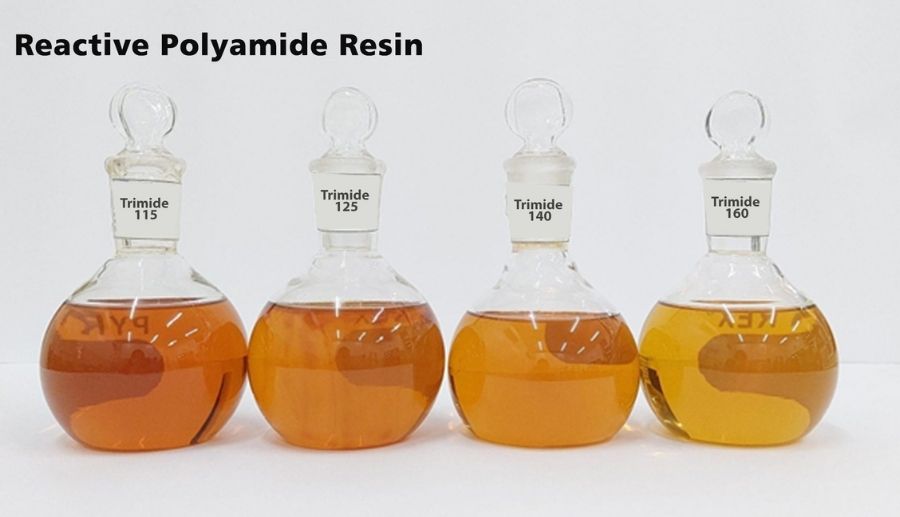
Polyamide resins are synthesized from dimerized fatty acids and polyamines. These resins are popular in printing ink formulations, particularly in flexo and gravure applications, due to their excellent adhesion, water resistance and flexibility. They perform well on a wide variety of substrates including polyethylene (PE), polypropylene (PP) and high-density polyethylene (HDPE).
A distinguishing feature of polyamide resin adhesive is its strong adhesion to non-porous and untreated surfaces. This capability is highly valued in the flexible packaging industry, where maintaining print clarity and color integrity is essential. In addition to adhesion, these resins provide strong resistance to abrasion and excellent wetting properties, making them suitable for use in harsh environments and extreme handling conditions.
Non-reactive polyamide resins are formulated for freeze-thaw resistance and alcohol solubility – allowing inks to remain stable and effective in cold storage or high-alcohol solvent systems. Polyamide resins can be customized with varied softening points and viscosities, enabling precise control over ink or coating behavior. However, compared to ketonic and phenolic resins, polyamide formulations may have limitations in thermal resistance and hardness. They are preferred where elasticity and chemical resistance take precedence over rigidity.
Which Resin Type Offers the Most Flexibility in Formulation?
When comparing adaptability across formulations, synthetic ketonic resins often emerge as the most flexible. They can be engineered with varied melting ranges, viscosities and solubility profiles, allowing for broad integration into different systems including acrylics, nitrocellulose and polyurethanes. This customization makes ketonic resins particularly attractive in applications demanding quick drying times and balanced film formation.
Phenolic resins, especially novolac phenolic resin, are more rigid in terms of formulation flexibility but offer superior stability and hardness. Their cross-linking capabilities are unmatched in high-temperature and high-stress scenarios, such as in industrial paints and varnishes. However, this rigidity can be a drawback in applications requiring elasticity or frequent mechanical stress.
They provide excellent solubility, compatibility and performance in alcohol-based systems but may fall short under sustained heat exposure or where a hard film is required. Its softness and flexibility, however, make them ideal for flexible packaging inks.
How Do These Resins Compare in Terms of Processing and Application Techniques?
In terms of processing, ketonic resin is known for its low energy requirements due to its fast-drying nature and excellent solubility. This makes it ideal for high-speed manufacturing setups, such as continuous ink printing or quick-turnaround coatings. Additionally, ketonic resin suppliers often provide a range of grades to accommodate different methods like gravure, flexographic or screen printing.
Phenolic resins typically require more controlled processing environments, especially when used in heat-curing systems. Their thermosetting nature means they are more suited to batch processing rather than continuous production, which can affect throughput in fast-paced production environments.
Polyamide resins, by contrast, are relatively easy to work with and can be processed at lower temperatures compared to phenolic systems. Their alcohol solubility and fast wetting make them suitable for both manual and automated printing systems. This flexibility often positions polyamide epoxy products as go-to materials in medium-complexity applications requiring consistent results with minimal downtime.

What Factors Should be Considered When Choosing Between These Resins?
The decision to choose between ketonic resin, phenolic resin or polyamide resin depends heavily on the intended application, required performance characteristics and processing environment. Factors such as:
- Thermal resistance
- Adhesion properties
- Flexibility vs. hardness
- Solvent compatibility
- Environmental exposure
- Application method (printing, coating, adhesive bonding)
must all be carefully evaluated.
For high-gloss, fast-drying and versatile applications, synthetic ketonic resin may be the preferred choice. Where chemical and heat resistance are paramount, phenolic resin material holds a clear advantage. For flexible packaging, substrates with poor adhesion or systems requiring moderate chemical resilience, polyamide resins often deliver optimal performance.
Conclusion
Choosing between ketonic resins, phenolic resins and polyamide resins requires a technical evaluation of each resin’s characteristics in alignment with application demands. While each type offers distinct advantages – whether it’s the drying efficiency and flexibility of synthetic ketonic resin, the thermal stability of novolac phenolic resin or the surface compatibility of resin polyamide – the right material must strike a balance between performance, processing convenience and cost-efficiency.
For industries seeking long-term performance, process reliability & ensures that the selected material not only meets technical requirements but also adapts to evolving operational needs.
- PVB Resin for Structural & Hot-Melt Adhesives in Saudi Arabia’s Construction
- PVB Resin Demand in Brazil’s Furniture Coatings Industry
- PVB Resin for Etch Primers in Lebanon’s Construction Sector
- PVB Resin in Etch Primers for Peru Mining & Heavy Equipment
- PVB Resin for Etch Primers in Mexico’s Automotive Industry