


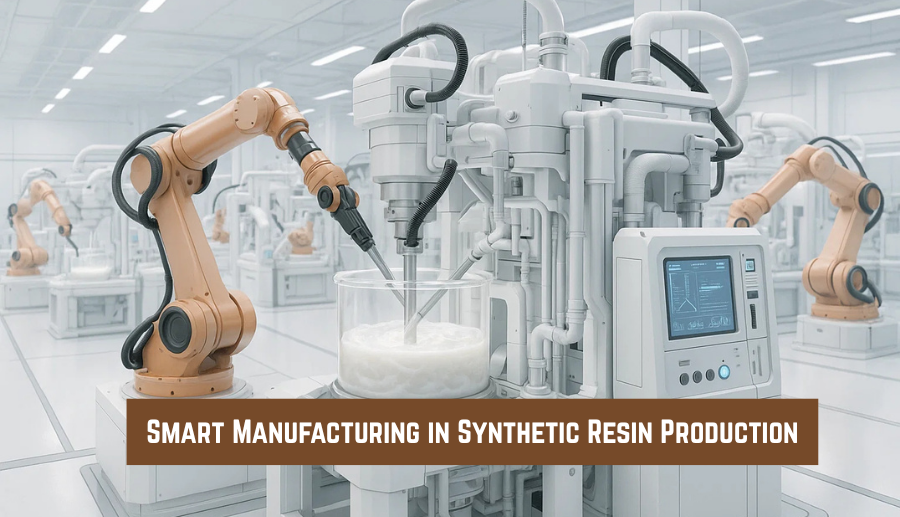
Synthetic resins are foundational to countless industries, from automotive and construction to packaging, electronics, and adhesives. With increasing demand for high-performance, customized, and sustainable resin systems, the need for greater efficiency, precision, and innovation in formulation and production has never been more pressing. The convergence of Artificial Intelligence (AI), machine learning (ML), and automation technologies is ushering in a new era of smart manufacturing in the resin industry. This article explores how these digital advancements are transforming synthetic resin formulation, R&D processes, and batch production operations.

What is Driving the Adoption of AI and Automation in Resin Manufacturing?
The synthetic resin industry is grappling with rising raw material costs, environmental regulations, and market pressure to deliver custom formulations faster. To stay competitive, resin manufacturers are embracing AI-driven tools and automation systems that optimize processes, reduce waste, and improve consistency. The increasing digitization of the chemical industry and Industry 4.0 principles have made such transformations both viable and necessary.
How Is AI Enhancing Resin R&D and Formulation Design?
AI is revolutionizing the way chemists and formulation scientists develop new resin systems. Using machine learning algorithms trained on historical formulation data, researchers can predict resin properties, performance, and compatibility with different substrates. This enables accelerated material discovery, shortens development cycles, and reduces trial-and-error experimentation. Tools like predictive analytics and generative design help tailor resins for specific applications such as high-temperature resistance, UV durability, or biodegradability.
What Role Does Big Data Play in Resin Innovation?
Big Data analytics allows for the integration and analysis of massive datasets from lab trials, customer feedback, quality control, and raw material specifications. By correlating this information, manufacturers can uncover trends and fine-tune formulations more effectively. For example, predictive maintenance data can be integrated into process optimization, helping ensure smoother production runs and fewer material rejections.
How Are Digital Twin Technologies Transforming Resin Development?
Digital twin models create virtual simulations of resin formulations, testing their mechanical, thermal, and chemical properties without physical trials. This virtual prototyping drastically reduces development time and costs. For synthetic resin producers, it means a faster route to market for new products while maintaining high levels of customization and compliance.
What Are the Benefits of Automation in Batch Production of Resins?
Automated batch production systems minimize human error, standardize mixing protocols, and enable precise control over reaction parameters such as temperature, viscosity, and polymerization time. This leads to improved batch-to-batch consistency, reduced energy consumption, and better overall product quality. Real-time sensors and control systems ensure that every batch meets stringent specifications.
How Is Robotics Being Used in Resin Manufacturing Plants?
Advanced robotics handle tasks such as raw material handling, mixing, packaging, and palletizing. These robots work in hazardous or high-temperature environments, increasing worker safety and operational efficiency. Cobots (collaborative robots) are being introduced to work alongside technicians in labs and production lines, handling repetitive tasks like weighing ingredients or cleaning equipment.
How Does AI Help in Quality Assurance and Synthetic Resin Process Optimization?
AI-powered quality control systems analyze sensor data in real-time to detect anomalies or deviations from standard production parameters. Image recognition tools inspect resin appearance, color, and texture, while spectroscopic sensors measure molecular composition. These insights allow for on-the-fly corrections, reducing waste and rework.
How Is AI Impacting Sustainability and Green Chemistry in Resins?
With global pressure to develop sustainable materials, AI is enabling greener resin formulation by helping identify eco-friendly raw materials, optimize energy use, and design low-emission processes. Algorithms can simulate life cycle assessments (LCA) to evaluate the environmental impact of different resin chemistries. This is aiding manufacturers in transitioning toward bio-based, recyclable, or compostable resin systems.

What Are the Challenges in Adopting AI and Automation in Resin Formulation?
Despite the benefits, integration is not without hurdles. High upfront costs, data security concerns, lack of skilled personnel, and integration with legacy systems pose challenges. Moreover, small to mid-sized resin manufacturers may find it difficult to adopt AI without support or partnerships. However, with cloud-based platforms and modular AI tools becoming more accessible, adoption is expected to accelerate.
Conclusion
AI and automation are redefining the future of synthetic resin formulation and production. By improving formulation accuracy, accelerating R&D, and enabling smart, sustainable manufacturing, these technologies are empowering the industry to meet rising market demands with agility and innovation. While implementation challenges exist, the long-term benefits far outweigh the costs. As more companies invest in digital transformation, AI-driven smart manufacturing is set to become the new standard in the resin industry.
For resin manufacturers, embracing this shift isn’t just a technological upgrade—it’s a strategic imperative to remain competitive in a dynamic, demanding global market.
- Phenolic Resin Manufacturing Process: From Raw Material to Finished Product
- Questions to Ask a Phenolic Resin Manufacturer Before Placing an Order
- Alkyl Phenol Formaldehyde Resins Market Demand in Asia and Middle East
- Alkyl Phenol Formaldehyde Resin vs Conventional Phenolic Resin
- What Is Alkyl Phenol Formaldehyde Resin and Where Is It Used