


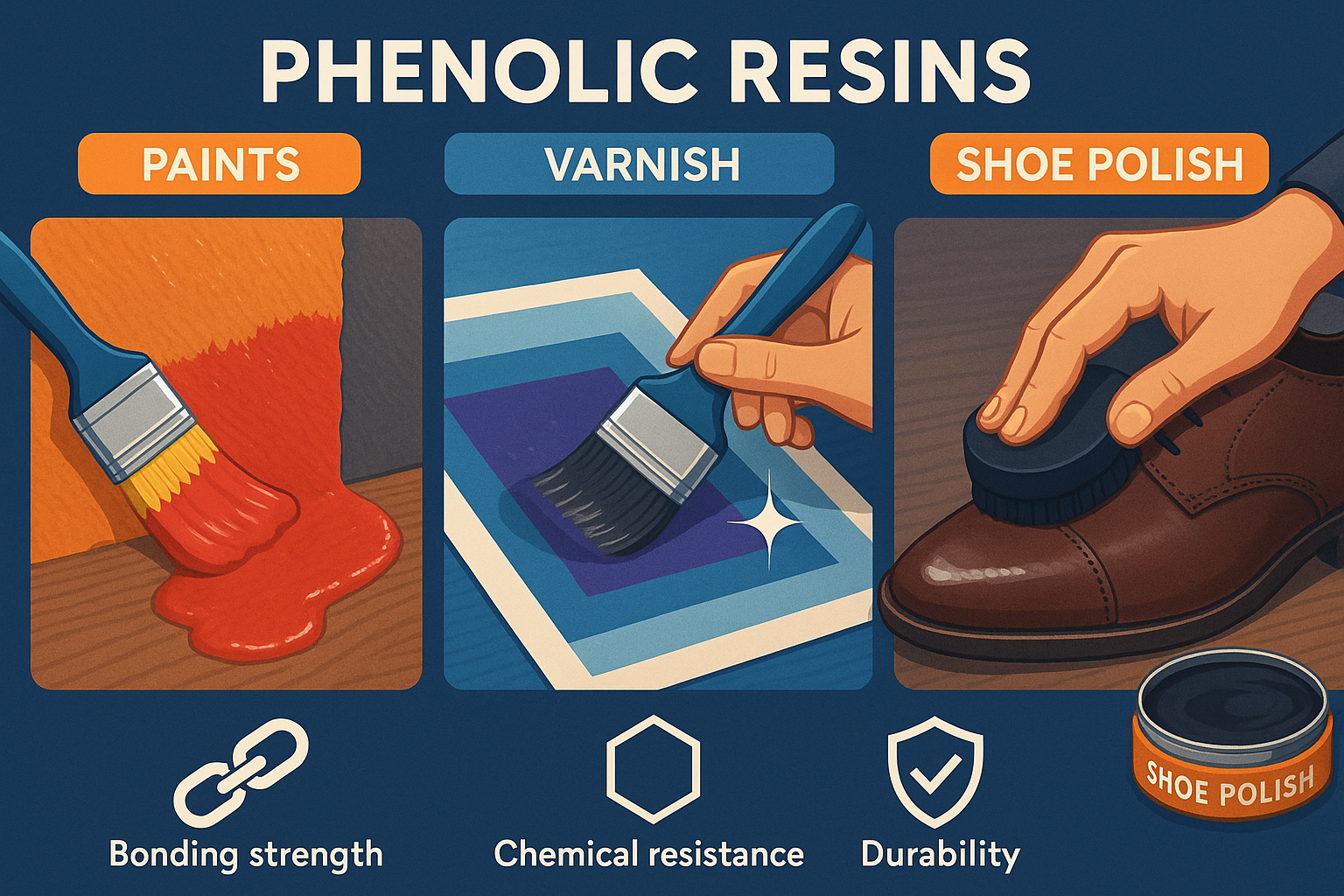
Phenolic resins are widely used in a variety of industries due to their excellent bonding, durability, and chemical resistance properties. These resins are essential ingredients in paints, overprint varnishes, and shoe polishes, where they contribute to the strength, gloss, and overall performance of the final product. With an increasing demand for high-quality and durable coatings and finishes, understanding the role of phenolic resins in these applications is key to improving product formulations and performance. This article explores the various applications of phenolic resins in paints, overprint varnishes, and shoe polish, shedding light on the specific benefits and functionalities that make them a valuable component in these products.

How Do Phenolic Resins Enhance the Durability and Performance of Paints?
Phenolic resins play a significant role in enhancing the durability and performance of paints. As a key ingredient in paint formulations, phenolic resins contribute to the hardness, gloss, and chemical resistance of the finished paint. Their unique properties make them particularly effective in industrial coatings, automotive paints, and protective coatings.
- Hardness and Durability: Phenolic resins are known for their excellent hardness and resistance to abrasion. In paints, they help create a tough, long-lasting finish that withstands wear and tear, making them ideal for use in high-traffic areas or harsh environments.
- Chemical Resistance: Phenolic resins provide paints with superior resistance to solvents, oils, and other chemicals. This is particularly important for coatings used in industrial applications, where exposure to corrosive substances is common.
- Gloss and Finish: The resin imparts a high level of gloss and smoothness, contributing to a premium aesthetic finish that is both attractive and durable.
By incorporating phenolic resins into paint formulations, manufacturers can create coatings that offer both aesthetic appeal and functional longevity, making them suitable for a wide range of applications.
What Role Do Phenolic Resins Play in Overprint Varnishes?
Overprint varnishes are used to provide a protective coating over printed materials, enhancing their appearance and extending their shelf life. Phenolic resins are essential in overprint varnishes due to their ability to improve the varnish’s performance in terms of adhesion, durability, and gloss.
- Improved Adhesion: Phenolic resins offer excellent adhesion to various substrates, ensuring that the varnish bonds securely to printed materials like paper, cardboard, and labels. This ensures that the overprint varnish stays intact and doesn’t peel or fade over time.
- Enhanced Gloss and Clarity: Phenolic resins contribute to a high-gloss finish, improving the visual appeal of printed materials. The clarity and smoothness provided by the resin also help enhance the sharpness of printed designs and colors.
- Protection Against Wear and Tear: Overprint varnishes that contain phenolic resins offer better protection against abrasion, moisture, and UV damage, helping to preserve the quality and longevity of printed materials. This is especially important in the packaging and publishing industries, where visual appeal and durability are crucial.
For manufacturers in the printing industry, phenolic resins offer a reliable solution for producing varnishes that not only enhance the visual qualities of printed materials but also protect them from environmental and mechanical stresses.
How Do Phenolic Resins Contribute to the Quality of Shoe Polish?
Shoe polish is a popular product used to maintain and enhance the appearance of leather footwear. Phenolic resins are commonly used in shoe polish formulations due to their ability to provide a durable, glossy finish while improving the polish’s longevity.
- Gloss and Shine: Phenolic resins provide shoe polish with a high-gloss finish, giving shoes an attractive, polished look. The resin helps create a smooth, shiny layer on the leather, which enhances the overall appearance of the shoes.
- Water Resistance: Phenolic resins improve the water resistance of shoe polish, helping to protect leather from moisture and prevent it from becoming damaged or discolored. This makes the polish ideal for maintaining shoes in outdoor conditions or wet climates.
- Leather Protection: The resin also helps to nourish and protect the leather, preventing it from drying out, cracking, or becoming brittle. This results in a longer-lasting, more durable finish that helps maintain the quality of the shoes over time.
By incorporating phenolic resins into shoe polish, manufacturers can produce a product that not only enhances the aesthetic appeal of leather footwear but also provides long-lasting protection against wear, water, and environmental elements.
What Are the Benefits of Using Modified Phenolic Resins in Paints and Varnishes?
Modified phenolic resins, such as those modified with rosin, are increasingly being used in the formulation of paints and varnishes. These resins offer additional benefits over traditional phenolic resins, making them suitable for more specific applications.
- Improved Flexibility: Modified phenolic resins, particularly those blended with rosin, offer improved flexibility compared to standard phenolic resins. This makes them suitable for applications where the coating needs to stretch or bend without cracking, such as in certain types of industrial paints or coatings for flexible substrates.
- Increased Gloss and Clarity: The addition of rosin or other modifying agents enhances the varnish’s clarity and gloss. This allows the finished product to have an even higher sheen and aesthetic appeal, making it suitable for premium coatings and finishes.
- Enhanced Compatibility: Modified phenolic resins are often more compatible with other resins and solvents, giving formulators the flexibility to adjust the paint or varnish properties for specific applications.
Using modified phenolic resins in paints and varnishes allows manufacturers to tailor the performance of their products to meet the unique demands of different substrates and environments.

How Can Phenolic Resins Be Used in Sustainable Coatings and Polishes?
As demand for sustainable and eco-friendly products increases, the use of phenolic resins in coatings and polishes is evolving. Many manufacturers are now focusing on the environmental impact of their products and looking for ways to incorporate more sustainable materials.
- Biodegradable Phenolic Resins: Some phenolic resins are derived from renewable, plant-based materials, offering a more sustainable alternative to traditional petroleum-based resins. This makes them an attractive choice for companies looking to reduce their environmental footprint.
- Low-VOC Formulations: Phenolic resins can be modified to reduce volatile organic compound (VOC) emissions, making them more environmentally friendly and compliant with global regulations on air quality.
- Eco-Friendly Packaging: In addition to using sustainable resins, manufacturers can also focus on eco-friendly packaging, ensuring that the entire product lifecycle is aligned with sustainability goals.
By incorporating these sustainable practices, manufacturers of paints, overprint varnishes, and shoe polishes can cater to the growing consumer demand for green products while maintaining the performance benefits of phenolic resins.
Conclusion
Phenolic resins play a critical role in enhancing the performance, durability, and aesthetic qualities of paints, overprint varnishes, and shoe polishes. Their ability to provide gloss, chemical resistance, and flexibility makes them indispensable in these industries. With the rise of clean-label and sustainable product demands, modified phenolic resins and their eco-friendly alternatives are becoming increasingly important in product formulations. Manufacturers and distributors can leverage the many benefits of phenolic resins to meet consumer needs for high-performance, visually appealing, and environmentally responsible products. By understanding the unique properties and applications of phenolic resins, companies can create superior coatings and finishes that stand out in a competitive market.
- PVB Resin for Structural & Hot-Melt Adhesives in Saudi Arabia’s Construction
- PVB Resin Demand in Brazil’s Furniture Coatings Industry
- PVB Resin for Etch Primers in Lebanon’s Construction Sector
- PVB Resin in Etch Primers for Peru Mining & Heavy Equipment
- PVB Resin for Etch Primers in Mexico’s Automotive Industry