

In this article
A varnish batch looks right during charging, then turns hazy as it cools, while another leaves gritty material behind or separates into layers in storage. When haze or residue appears during varnish preparation with Rosin Modified Phenolic Resin, recording the symptom must come before any extra heat, solvent or mixing.
This guide outlines an investigation sequence for varnishes based on phenolic resin modified with rosin and refers to Tridev Group’s published information for product details. Because the cause can lie in the liquid medium, processing or storage, the sequence examines every variable rather than starting with the resin.
Identify the Rosin Modified Phenolic Resin Dissolution Symptom
Start by describing what is visible in the rosin modified phenolic resin varnish. Haze is reduced clarity, residue is discrete material suspended or settled in the sample, and separation produces distinct layers. Record when each symptom first appears.
- Haze during preparation: Note the charging stage and time since resin addition.
- Haze after cooling: Record when clarity changed and the cooling duration.
- Particles or residue: Describe their appearance, location and whether they appeared during preparation or storage.
- Distinct layers: Note the time to separation, approximate layer proportions and storage conditions.
Record sample temperature and age for every observation. Observe each sample under consistent lighting and against the same background. Assess colour separately from clarity, since a darker varnish does not necessarily indicate incomplete dissolution.
Distinguish Incomplete Dissolution from Rosin Phenol Resin Incompatibility
Incomplete dissolution means some material has not entered the intended uniform varnish phase under the defined preparation conditions, while incompatibility describes inadequate compatibility between components under the formulation, preparation or storage conditions being evaluated. Appearance alone rarely settles which applies to a Rosin Phenol Resin varnish, and clouding on cooling needs further work before a mechanism is assumed.
Residue could come from another raw material, the equipment, the container or any component that has not fully dissolved, so its identity may need appropriate examination. Product names add uncertainty too, as materials sold as Phenolic Rosin Resin or Phenolic Modified Rosin Ester are not necessarily chemically identical or interchangeable.
Document the Oil or Solvent Blend for Phenolic Resin Modified with Rosin
The liquid medium is the first variable to pin down when a Phenolic Resin Modified with Rosin varnish shows any of these symptoms. Record:
- Oil or solvent identity
- Supplier, grade and batch of each liquid
- Blend proportions, with the basis stated (weight or volume)
- Virgin or recovered material, where applicable
- Any substitutions or additional liquids introduced
- Storage and handling history relevant to the batch
A description such as “standard solvent” cannot reproduce a preparation. Oils and solvents are not interchangeable, and a change of supplier or grade can matter even when the generic name stays the same. Where the blend changed, compare the actual batch record against the approved formulation entry by entry.
Check Rosin Modified Phenolic Resin Concentration and Processing History
Once the liquid medium is documented, reconstruct what was actually made. Review these records against the approved procedure:
- Actual weighed quantities and the concentration basis used
- Charging order
- Recorded mixing and heating history
- Measured values, not equipment setpoints alone
- Cooling sequence and holding time
- Documented losses or additions during processing
Calculated resin loading and measured nonvolatile content are not the same figure when other nonvolatile ingredients are present. Treat them as separate data points rather than proxies for each other.
Composition can shift during preparation, but whether it did in a given batch is something the records must show rather than assume. Read equipment logs and operator notes together, because a delay, interruption or late addition may appear in one record but not the other.
Compare Fresh and Retained Rosin Modified Phenolic Resin Samples
Once records are gathered, three sample types help isolate the variable involved:
- A freshly prepared varnish sample
- A retained varnish sample from a previously acceptable batch
- Retained samples of the supplied resin or liquid raw materials
For each, record batch identity, sample age, container condition and storage history. Compare all samples at a consistent temperature and observation interval, using the same preparation or evaluation procedure throughout.
Where appropriate, a controlled laboratory comparison can change one identified factor while documenting the rest. Preparing the same approved blend with resin from the current lot and from a retained lot is one example.
Retained material is not a frozen reference, because storage conditions can affect any sample over time. Equally, one clear sample does not prove that every production variable was acceptable.
Assess Haze, Residue and Separation in Rosin Modified Phenolic Resin Varnish
Use the collected evidence to select a comparison that can distinguish between the remaining explanations, and record what each test is intended to establish before carrying it out. Laboratory examination should stay within documented capabilities and approved procedures.
If filtration is evaluated, removing visible material neither identifies its origin nor proves the remaining varnish suitable, and it may alter the material balance. Rather than adjusting production batches directly, trial any formulation or processing change on a controlled sample and review it against the intended varnish requirements before adoption.
Prepare a Technical Enquiry for Rosin Modified Phenolic Resin
When supplier input would help, a structured enquiry makes the discussion reproducible. Include:
- Resin manufacturer, grade and batch
- Intended varnish application
- Oil or solvent blend and concentration basis
- Preparation, cooling and storage records
- Timing of the first observed symptom
- Photographs with sample temperature and age
- Results from fresh and retained sample comparisons
- Available samples and relevant product documents
Label each item as confirmed or suspected. “Haze appeared after cooling to the recorded temperature” is more useful than “the varnish is not right”.
Confirm sample submission arrangements with the supplier before dispatching any material. For enquiries about a particular grade, you can contact Tridev Group with the details gathered above.
About Tridev Group as a Rosin Modified Phenolic Resin Manufacturer
Tridev Group, based in Vapi, Gujarat, brings together Tridev Resins (India) Pvt. Ltd., Tridev Industries Pvt. Ltd. and Micro Resins Pvt. Ltd. As a Rosin Modified Phenolic Resin Supplier to offset and gravure ink manufacturers, it publishes grades such as PH-100120 for sheet fed offset, lithographic and gravure inks, and PH-5060 for web offset, lithographic and gravure inks.
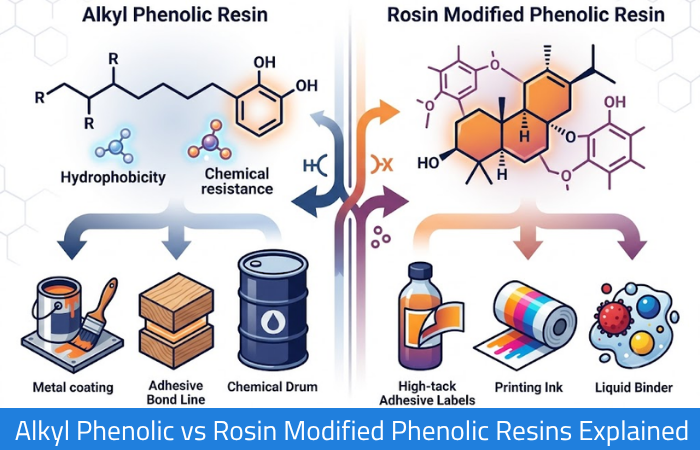
Both grades are covered in its offset and lithographic ink guide, and the company also explains how this family differs from alkyl phenolic resin.
Conclusion on Rosin Modified Phenolic Resin Dissolution Problems
Haze, residue and separation can arise from different causes, and each calls for its own line of evidence. Documented observations and controlled comparisons narrow the possibilities before any corrective action is selected. Any change to the formulation, raw materials or grade selection then rests on findings rather than assumptions. For questions about rosin modified phenolic resin grades for printing ink varnishes, Tridev Group welcomes enquiries through its official channels.
Need Technical Information or a Product Quote?
Our team responds with specifications, samples and pricing for your application.