

In this article
Price per kilogram alone can mislead when two resins carry different solids. Dividing the supplied price by the solids fraction gives cost per kilogram of resin solids, which buyers should then adjust for delivery and test against plant data and trials. Tridev Group manufactures PU resin for printing ink applications.
Why Compare Polyurethane Resin Price on a Resin Solids Basis?
A procurement team comparing polyurethane resin for inks receives two offers at ₹200 and ₹240 per kilogram. The lower figure looks like the obvious choice, but solvent based resins arrive as solutions, so each drum may hold a very different amount of usable resin.
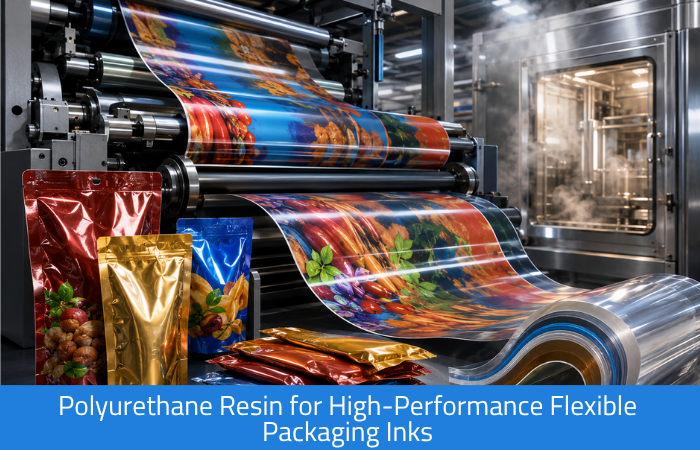
This guide compares polyurethane resin price on a solids basis, then adds delivered cost, processing evidence and qualification before you buy polyurethane resin. Buyers reviewing Tridev Group grades can apply it to a trial lot or a bulk polyurethane resin order alike.
What Separates Supplied Weight from Resin Solids in Polyurethane Resin Price?
Supplied weight is the net weight of material purchased, including the solvent or carrier in which the resin is dissolved. Packaging tare, meaning the weight of drums, liners or containers, is not supplied resin and must be excluded.
Resin solids represent the resin portion used in this calculation. Before applying any weight based formula, confirm that the solids percentage is stated on a weight basis rather than by volume.
A reported solids figure is not always pure polyurethane polymer. Total nonvolatile content can include additives or other nonvolatile ingredients, so the two figures are not automatically interchangeable.
Tridev Group offers polyurethane resins across a wide viscosity range with variable solids content, giving buyers a choice of grades. Using the confirmed figure for each grade keeps the comparison accurate.
How Do You Calculate Polyurethane Resin Cost per Kilogram of Solids?
Use comparable solids definitions for both offers. If the reported figures represent total nonvolatile content rather than polyurethane resin solids, label the comparison accordingly.
Two steps convert a purchase into a solids based cost:
Resin solids weight = Net supplied material weight × Resin solids fraction
Cost per kilogram of resin solids = Material purchase cost ÷ Resin solids weight
When only the unit price is known, one step gives the same result:
Cost per kilogram of resin solids = Price per kilogram supplied ÷ Resin solids fraction
Always enter the percentage as a decimal fraction. A solids content of 40% becomes 0.40, and 60% becomes 0.60.
Hypothetical teaching example only. These figures do not represent actual prices, product specifications or market quotations.
| Input or result | Material A | Material B |
|---|---|---|
| Net supplied weight | 1000 kg | 1000 kg |
| Price per kg supplied | ₹200 | ₹240 |
| Resin solids | 40% (0.40) | 60% (0.60) |
| Purchase cost | ₹200,000 | ₹240,000 |
| Resin solids weight | 400 kg | 600 kg |
| Cost per kg of resin solids | ₹500 | ₹400 |
Material A carries the lower supplied price, yet each kilogram of its resin solids costs ₹100 more than in Material B.
How Does Solvent Content Affect a Polyurethane Resin Price Comparison?
The solvent supplied with the resin is more than carrier weight. Its identity matters because it must be compatible with the solvents, pigments and other binders already in your ink system.
If the supplied solvent system is unsuitable for the intended formulation, confirm compatibility before considering the grade. Additional dilution should not be assumed to resolve the problem.
Ask each polyurethane resin supplier to name the solvent system in the quotation.
The solids based method does not isolate the manufacturer’s polymer price, nor does it imply the solvent has no value to your process.
For this comparison, allocate the full supplied material cost to the solids without applying a separate solvent credit. If procurement uses a solvent credit model, document its assumptions and apply the same method to every quotation.
How Do Freight and Packaging Change Bulk Polyurethane Resin Costs?
First establish whether freight and packaging are included in the quoted rate or charged separately.
Freight is often calculated on gross shipment weight, which includes containers and pallets, while the solids calculation uses net material weight. Keep the two figures apart so packaging never inflates the resin quantity.
Add separately charged packaging and applicable handling costs to the purchase total. Treat recoverable taxes consistently, either including or excluding them for every quotation.
The delivered comparison then becomes:
Delivered cost per kilogram of resin solids = Total included delivered purchase costs ÷ Resin solids weight
The costs in the numerator must relate to the same shipment quantity that produced the resin solids weight. Pairing a full load freight charge with a smaller order quantity would distort the result.
Larger volumes do not automatically change the rate, so confirm delivery terms with each quotation rather than assuming a volume discount.
Which Processing Costs Should PU Resin Buyers Measure Beyond the Quotation?
Purchase cost stops at delivery, while production cost continues through mixing, printing and drying. Use your plant records to establish these costs under comparable production conditions.
Relevant factors may include:
- Solvent lost to evaporation and cleaning during press runs
- Mixing time and labour per batch
- Drying energy on the press
- Usable yield after startup and changeover losses
- Rejected output that fails quality checks
A higher solids grade does not automatically shorten drying time or lower energy use, so measure each candidate rather than assume an outcome. Compare materials against a consistent unit of acceptable finished output, such as cost per square metre of approved printed film.
How Should You Qualify Performance Before You Buy Polyurethane Resin?
Solids normalisation is a financial tool. Two materials with identical cost per kilogram of solids can still behave differently in an ink, so the calculation cannot prove equivalent performance.
Tridev Group offers two categories within its polyurethane resin range: plasticiser polyurethane resin and film forming polyurethane resin. They serve different roles in a formulation, and one should not replace the other simply because both share polyurethane chemistry.
For polyurethane resin for printing inks, qualification criteria worth evaluating include:
- Compatibility with any vinyl or NC resins in the system
- Viscosity under application conditions
- Adhesion to the intended films
- Film flexibility after drying
- Suitability for the chosen printing method and end use
Treat these as acceptance criteria to test, not properties assumed for every grade. Run controlled trials that reflect your press and substrates, with your formulation team setting the pass levels.
About Tridev Group as a Polyurethane Resin Manufacturer
Tridev Group is based in Vapi, Gujarat, and manufactures, sells and exports synthetic resins for printing inks, paints, coatings and adhesives. As a polyurethane resin manufacturer, it directs its polyurethane offering at flexo and gravure printing, including NC free ink systems.
Conclusion on Polyurethane Resin Purchasing Decisions
Award the order only after the solids based figure has been combined with delivered costs, production evidence from your plant and qualification results for the intended ink.
If you are evaluating polyurethane resin for inks, contact Tridev Group to discuss a suitable grade, its solids basis and supplied form, and request a quotation.
Need Technical Information or a Product Quote?
Our team responds with specifications, samples and pricing for your application.